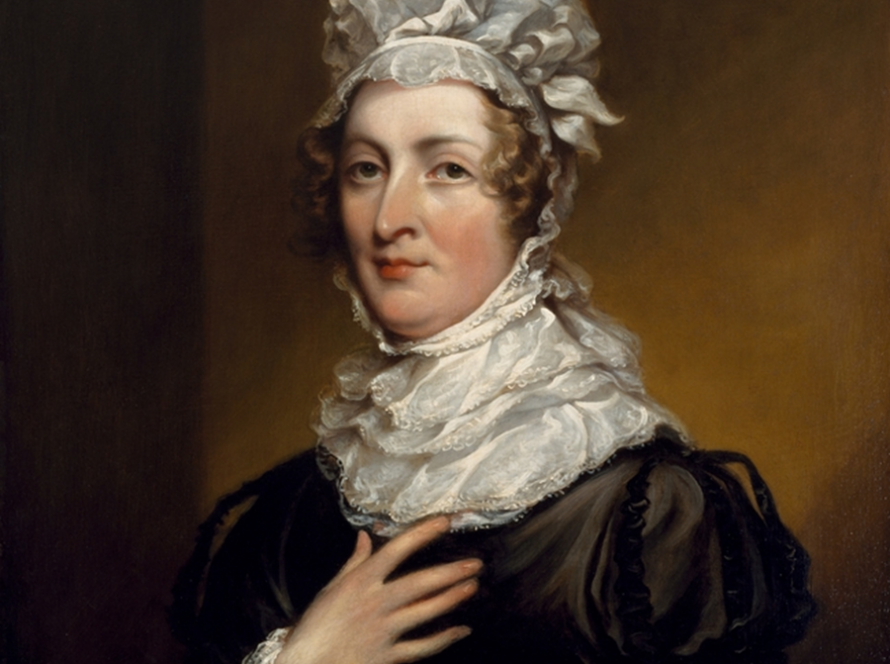
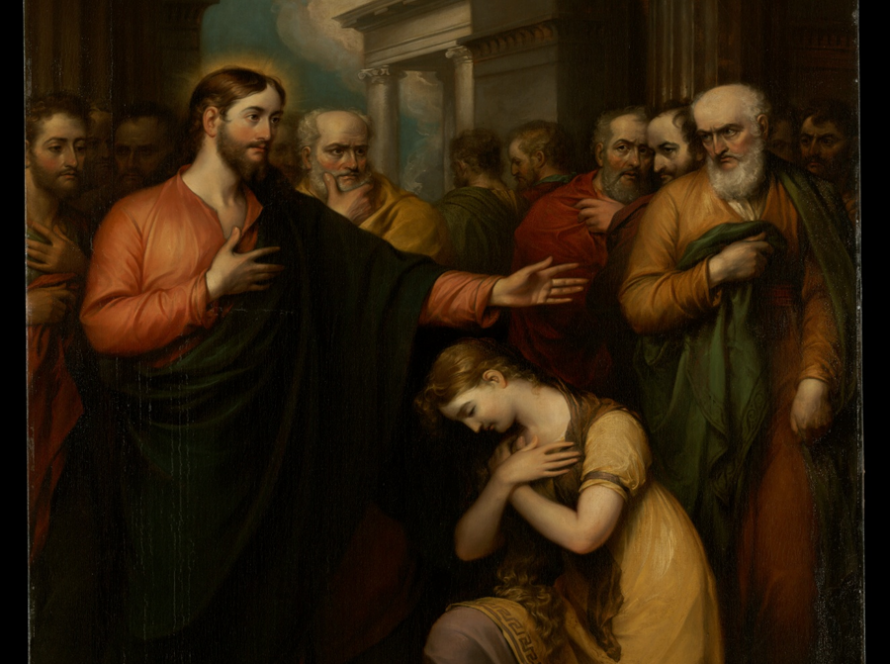
Trumbull’s portraiture was different when he painted his wife, Harvey. There is less formality and more warmth. He often painted her during life transitions, such as her wedding introductory portrait and the portrait that he painted of her in 1805, upon their return to America from England. The portraits that Trumbull painted of Harvey, besides the scant information that has been written about her, are the best historical record of her life. Through Trumbull’s eyes, we can see how he saw Harvey.
Trumbull met and married Harvey quickly and without any fanfare. She was an English woman, almost half his age with no social connections. Harvey is often described as an amateur watercolorist. [1] Historian Theodore Sizer records Harvey as a “face with nothing behind it” and a “hard drinking English girl” [2] Trumbull, himself, described her as his “faithful and beloved companion.” [3] It is true she did not possess a formal education, but she provided Trumbull with a domestic homebase
There is not that much information about the two of them together, so inferences must be made from the available details. While no known letters survive from Harvey to Trumbull, some letters are documented from Trumbull to Harvey. In them, he addresses her as “My Best Friend” or “My Dearest Friend” or some other close facsimile. [4]
Newly married, Trumbull wrote a letter of introduction for his wife to his brother, Jonathon Trumbull, on May 1, 1801. Trumbull and Harvey had been married for eight months. Trumbull explains to his brother that Harvey was without relations in England, her mother, sister and brother all dying before her when she was young. She had been educated by a notable woman in the country who taught Harvey not only the regular female accomplishments, such as reading, writing and housewifery, but taught her how to be resourceful and crafty. [5] Trumbull writes:
“She [Sarah] has acquired knowledge of other kinds here little attended to: there are things relating to the House in town or Country which She not pretty well know & and no article of her dress, except shoes, which She cannot and does not make…..No attachments therefore bind her strongly here and when the time arrives for leaving this country, I trust she will leave it with little regret, & soon become a good American. You will therefore not expect to see a modern fine Lady.” [6]
The painting below is often atributed to John Trumbull as a portrait of Sarah Trumbull. I can find no evidence, aside from the visual likeness, that this is the case.

[1] Sizer, Theodore. “The Autobiography of Colonel John Trumbull, Patriot-Artist.”
86 Sizer, Theodore. “John Trumbull.”
[3] Sizer, Theodore. “A Portrait of the Mysterious Sarah Trumbull.” Winterthur Portfolio 2 (1965)
[4] Sizer, Theodore. “The Autobiography of Colonel John Trumbull, Patriot-Artist.”
[5] Brookhiser, Richard. Glorious Lessons: John Trumbull, Painter of the American Revolution.
[6] Sizer, Theodore. “The Autobiography of Colonel John Trumbull, Patriot-Artist.”