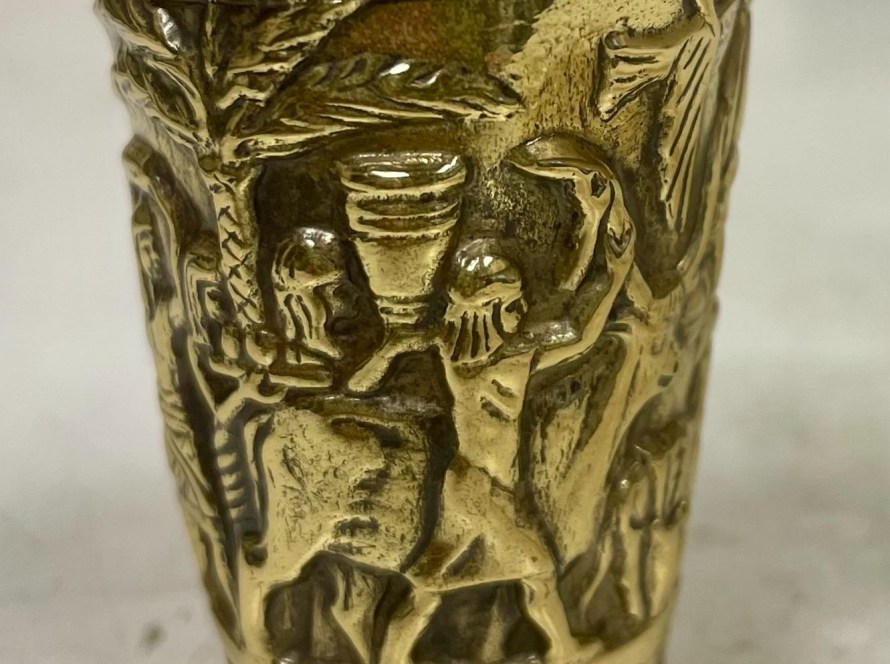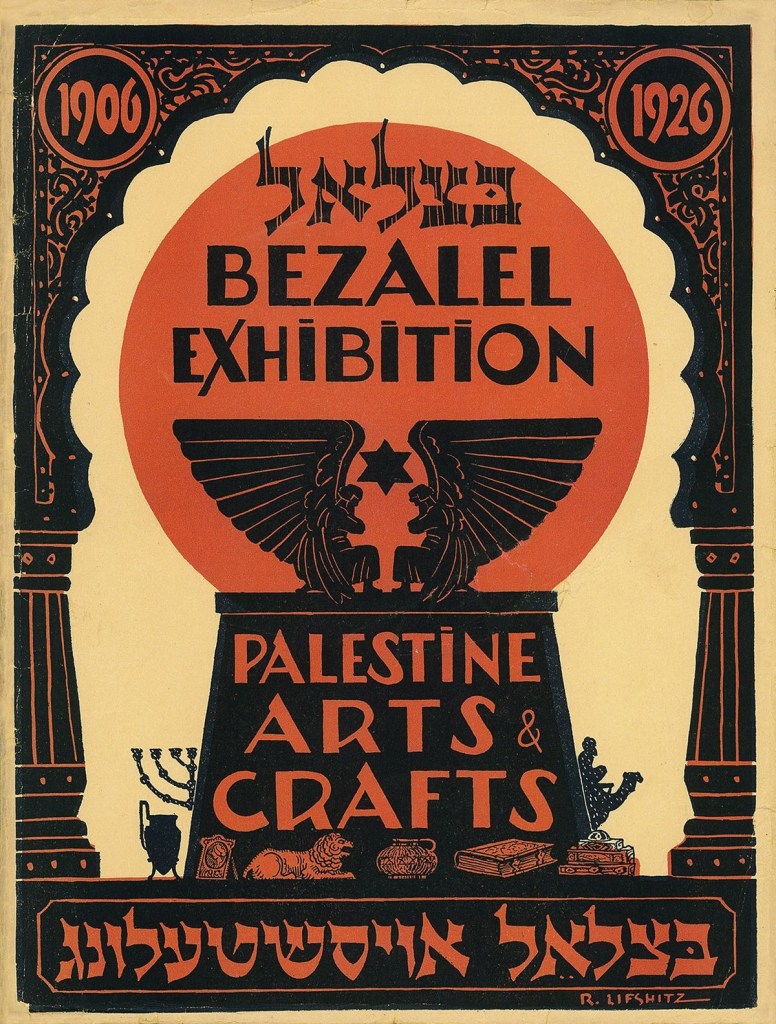
Boris Schatz was born in Lithuania in 1866. An artist in his own right, he lived and worked in many different cities across Europe before settling down in Jerusalem in 1906. This is the year he started Bezalel. Sometimes more visionary than artist, Schatz admired Italian renaissance work and imagined Art Nouveau as a revival of that art style for what he called his Bezalel Zionist Hebrew art. To him, the connection was clear. The Italian Renaissance harkened back to the early days of Rome and Bezalel’s art would harken back to the Israelites of Biblical times. The Israelites were free men, native to their own country, and had long traditions and civilizations and had the same glorious beginnings as Rome.

Schatz envisioned a utopian society of the future for Jewish people in his book, “Jerusalem Rebuilt – a Day Dream” of 1923. He wrote about a world one hundred years later (our world today) where Jewish culture is thriving in Jerusalem. The Bezalel school has hundreds of artists, building creatively off one another. The workshops of Bezalel would be bustling with activity and ideas. Life is communal and beautiful. Jewish struggle is a dark distant memory.
Schatz, although deeply religious, also embraced humanist, enlightenment types of ideals. Schatz considered himself and the men he worked with “Men of Renown” a term to denote that they were men among men, creating a legacy that would outlive them all. He espoused these humanist ideals even when they contradicted Jewish customs. An example of this is when Bezalel artist Shmuel Ben David died. There is an account of Shmuel Ben David’s body laying out with a sheet atop him. There are flowers around and people are paying their respects. Late in the evening, presumably because what Schatz was about to do broke Jewish tradition, Schatz came into the room. He knelt beside the body, anointed his face with oil and then proceeded to make a death mask of the artist. This breaks with Jewish death customs to have any graven images, but it was more important to Schatz to have a lasting reminder of his friend than to respect customs. He was a complicated man.
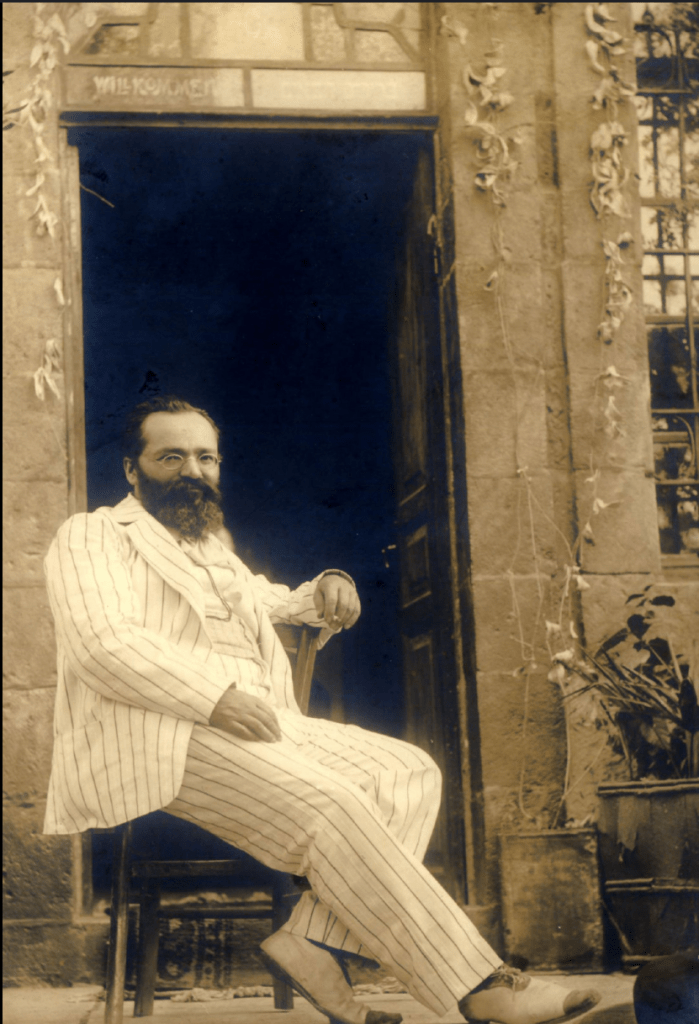
This story illustrates that Boris Schatz invested all that he had and was into the Bezalel school. There was no other alternative for him than to make Bezalel succeed. In the school, he found his culture, his faith, his friends and his future.