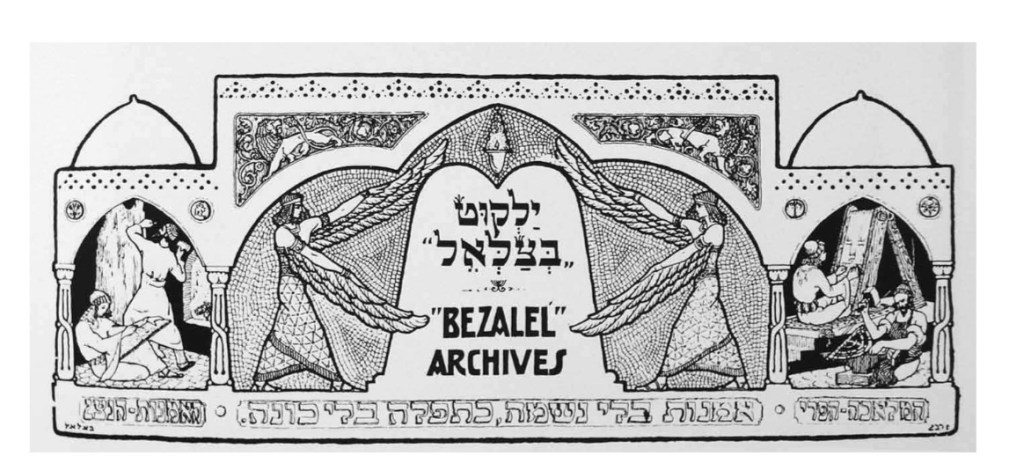
In 1906, Boris Schatz founded the Bezalel School of Arts and Crafts in Jerusalem. Schatz named his school after Bezalel from the Bible who was the architect and artist of the Tabernacle and Ark of the Covenant. Schatz envisioned his school to play just as important a role. This school would teach all types of art forms from painting, weaving, sculpting and stained glass making. The Bezalel School’s stated goal according to Boris Schatz was “to train the people of Jerusalem in crafts, develop original Jewish art and support Jewish artists, and to find visual expression for the much yearned-for national and spiritual independence that seeks to create a synthesis between European artistic traditions and the Jewish design traditions of the East and West, and to integrate it with the local culture of the Land of Israel.”
The art at Bezalel would follow three main themes: Biblical heroes, exile & redemption and romanticized Biblical stories. Great figures of the Bible like Kind David, Abraham, and Queen Esther would be subjects for art that were repeated again and again. The theme of exile and redemption is present often in passover items, such as Seder plates. Romanticized stories that depict Jewish holidays are painted in a stylized manner dripping Art Nouveau while honoring the tradition.
Under Boris Shatz’ leadership, Bezalel grew both in size and reputation. This did not stop the school from suffering financially, though. Bezalel was always in need of more funds. To solve this problem, in 1914, Boris Shatz packed up all of the art items that he could travel with and spent a long visit in North and South America and all over Europe. Traveling from city to city, he would sell items to support the school and his Zionist vision. It is likely through these trips that many of the items of Bezalel have survived, since so many items of Jewish heritage were lost during the Holocaust. For a while, the school rebounded and thrived.

However, by 1926, the Bezalel school was in deep financial trouble once again. The school closed. Boris Shatz, ever the optimist and unable to let his vision go, in 1930 packed everything up once again to raise funds for Bezalel. Touring North America again, selling art from city to city, Boris Schatz’ health failed him. During this trip, he died unceremoniously in Colorado at the age of 65. Schatz’ beloved school would close again. Bezalel would reopen soon after this with the same name but under new leadership. From then on, Art Nouveau at Bezalel would be a thing of the past. Bezalel artists would be encouraged to follow wherever their art would lead them.