Trumbull’s early life as the governor’s son, Harvard graduate, and American Revolutionary War hero set him apart as someone worthy of distinction and respect. His most cherished goal was to be recognized as America’s history painter, not just in his time but for generations to come. This would ensure that the sacrifices and triumphs of America’s early days would never be forgotten. His commission in 1817 to paint the Capitol Rotunda in Washington, D.C., cemented his legacy, immortalizing his historical compositions in the American consciousness for all time. His works have graced currency, including the back of the two-dollar bill, and have appeared on numerous postage stamps for over a century, making his paintings widely recognizable even if his name is not always immediately recalled.
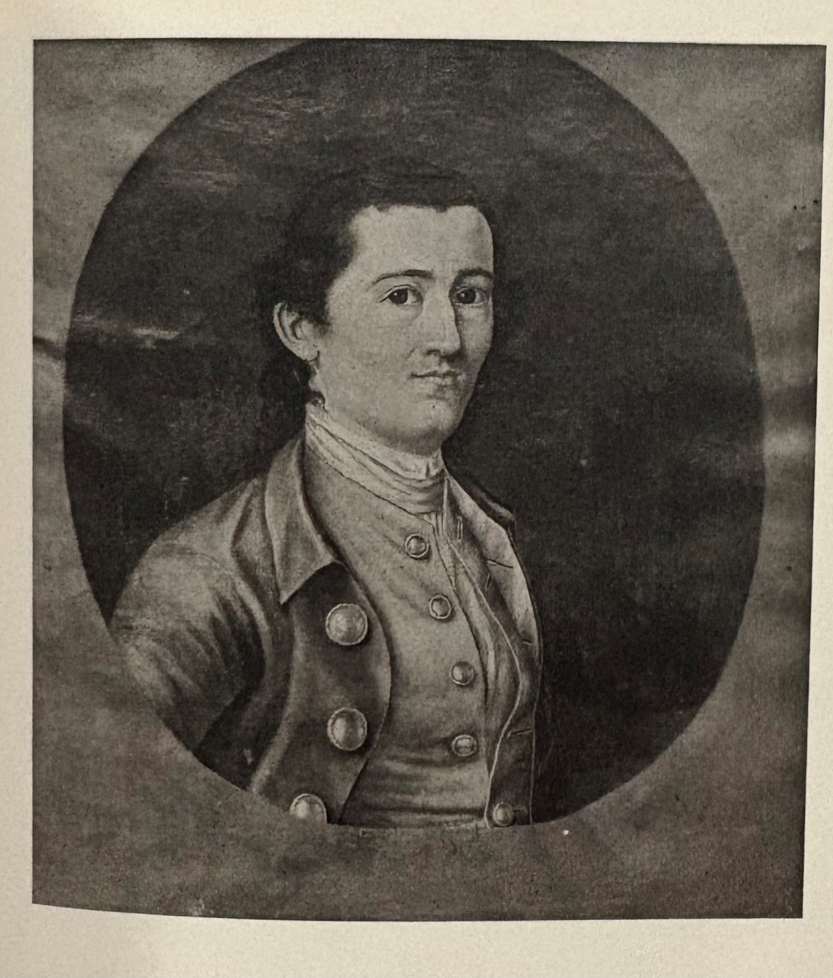
JOHN TRUMBULL, SELF PORTRAIT, 1773. UNITED STATES.
One of Trumbull’s fondest memories and accomplishments was serving as an aide-de-camp to General Washington during the American Revolution. Although this assignment was brief, his personal acquaintance with Washington profoundly influenced his art for the rest of his life. His great admiration for Washington led him to paint widely circulated portraits of the general, even as far as England, where his work was even reproduced as toile fabric. This devotion, however, also put him at risk. When he was arrested in England on suspicion of being a spy, his association with Washington only made him a greater target. Trumbull’s youthful bravado often propelled him forward, but it also led him into trouble, such as when he resigned from the Continental Army in a dispute over the date of his commission. His fiery personality, while aiding him in overcoming obstacles, sometimes became a source of hardship. Trumbull could be his own worst enemy.

JOHN TRUMBULL. GEORGE WASHINGTON AT THE BATTLE OF TRENTON. 1792. FOR THE CITY OF CHARLESTON, SOUTH CAROLINA.
Finally, he found lasting companionship in his marriage to Harvey. Though they had no children of their own, something Trumbull lamented in letters, his own words declare their marriage was a happy one. This is despite the whispers of contemporaries who spoke of drunkenness, emotional outbursts, and being generally difficult to handle. For comparison, from the man who knew Harvey best, some of Trumbull’s final words about his wife were, “She was the perfect personification of truth and sincerity- wise to counsel, kind to console-by far the most important and better moral half of me, and withal beautiful beyond the usual beauty of women!” When recording what we know of Harvey it is important to record the good as well as the bad.
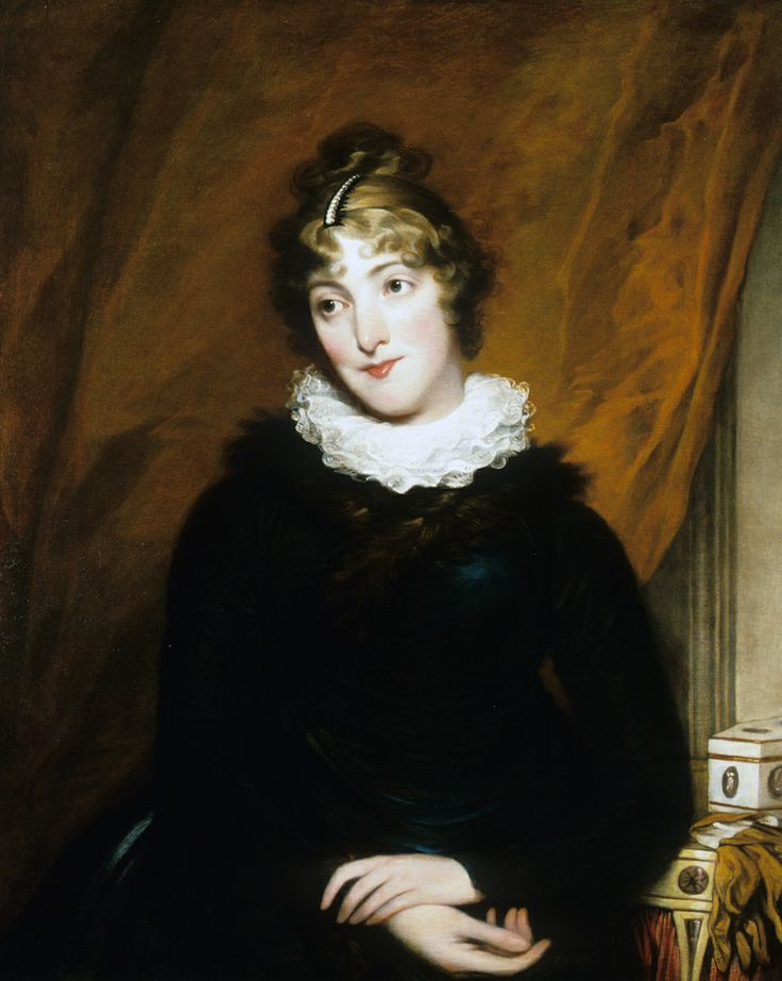
JOHN TRUMBULL, SARAH HOPE HARVEY TRUMBULL, 1805, UNITED STATES.
His devotion to her is evident in his frequent and affectionate portrayals of her in his paintings. When commissions were slow in England, Trumbull often painted her image into religious and political themes as a tribute to her beauty and significance in his life. Even after her passing, it appears that he continued to include her likeness in his artwork, as late as 1840, seventeen years after her death, a testament to his enduring love and admiration.
Although Harvey struggled with emotional outbursts and drinking, Trumbull remained steadfastly by her side. He would defend her reputation and stand by her even when others did not. It seems that her struggles intensified after their permanent move to New York following 1812, as she found herself far from the familiarity of England and uncomfortable around Trumbull’s American friends and family. Trumbull, aware of her homesickness, may have made allowances for her, as there are no recorded incidents of her acting out before their relocation.
Their intimate relationship is revealed in small but telling moments, such as when Trumbull sits for a portrait by Stuart as a gift for Harvey, fulfilling her personal request. She admired Trumbull deeply, and he, in turn, provided her with a home and a sense of security. Given Harvey’s tumultuous and mysterious early life, it is possible that her marriage to Trumbull was the first stable home she had ever known.

GILBERT STUART, JOHN TRUMBULL, 1818, UNITED STATES.
Trumbull’s devotion to Harvey is poignantly reflected in his final years. When he died, the portrait he had painted of her two decades earlier still hung beside his bed. Harvey, in her dark dress with the white lace accent, was the first face he saw each morning and the last face he saw at night. At her funeral, his remark that he preferred to dwell in memories of her rather than seek the company of others is shown in action here and is a powerful testament to their bond and his profound dependence on her.

JOHN TRUMBULL, SARAH HOPE HARVEY TRUMBULL, 1816-1824, UNITED STATES.
In examining Trumbull’s relationships with other artists of the time, such as Copley, Stuart, and Peale, it becomes apparent that early American portraiture for the private sphere, over time, had changed into a personal record of the artists’ personal history. It is not just that we can see what their families look like. It is that we can see what their families looked like through the artist’s eyes.
Trumbull’s portraits of Harvey reflect what was happening in America in a broader sense with portraiture. Portraits were initially meant as family mementos. They were keepsakes and tokens of love shown in a domestic setting. With portraits, you could trace lineage and family identity. They served as records, but personal records, important to their own families. Trumbull’s portraits of Harvey illustrate the shift of portraiture from personal, such as his introductory portrait of her sent to his family, to the public portrait of Harvey that was hung over their resting place. As a public memorialization, he planned their own mausoleum with their portraits as evidence of an important time in America’s history. Trumbull understood the shift from private portraits as memorials to public portraiture as a record of cultural history, preserved and exhibited for posterity.
Boettcher, Graham C. “The Artist’s Queen: John Trumbull’s” Sarah Trumbull on Her Deathbed”.” Yale University Art Gallery Bulletin (2015): 35-43.