Trumbull reconnected with his old acquaintances of the Revolutionary War and painted many of their likenesses. One time, Trumbull attended a banquet given in New York on July 4, 1804, for the members of the Society of Cincinnati, which is an organization of Revolutionary War Officers. It was there that Trumbull witnessed an important American historical moment as it unfolded. Present at the meeting were both Alexander Hamilton and Aaron Burr just days before their dual. Trumbull records that Alexander Hamilton was cheerful and sung an old military song, while Aaron Burr was “silent, gloomy and sour.” No one, including Trumbull, knew what would transpire in the coming days, but Trumbull’s account of this banquet is the most detailed account of the last pre-dual encounter that Burr and Hamilton had.
Trumbull painted portraits of Alexander Hamilton both during his lifetime and in a commemorative way. In 1792, Trumbull painted a full-length portrait of Hamilton when he was serving as Secretary of the Treasury. Then later, Trumbull painted a bust sized portrait of Hamilton after his death.
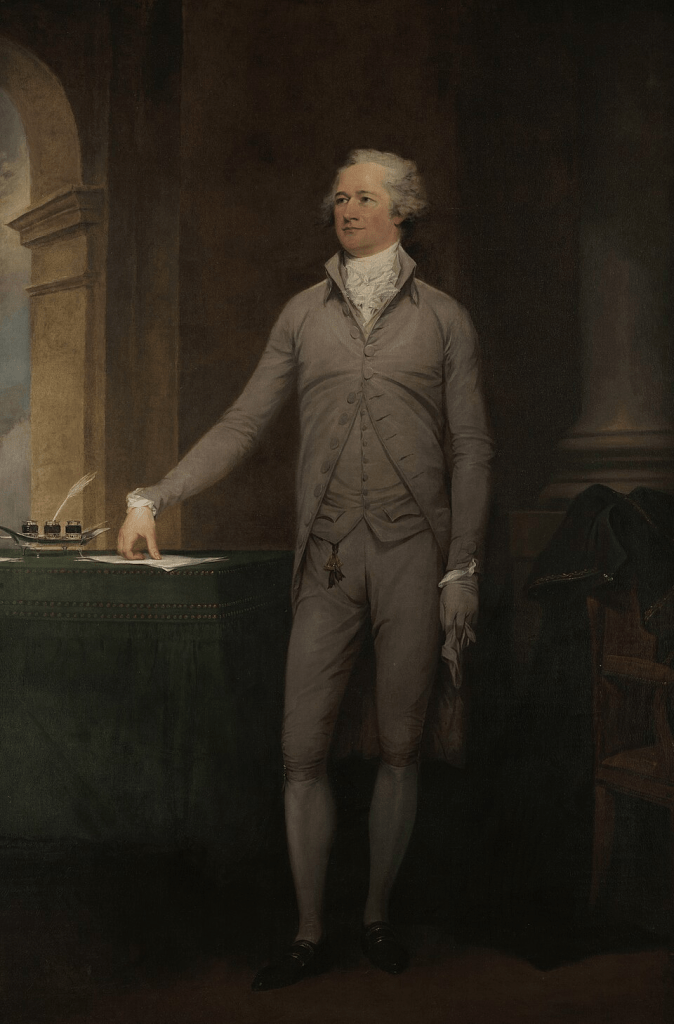
JOHN TRUMBULL. Alexander Hamilton 1792. United States.
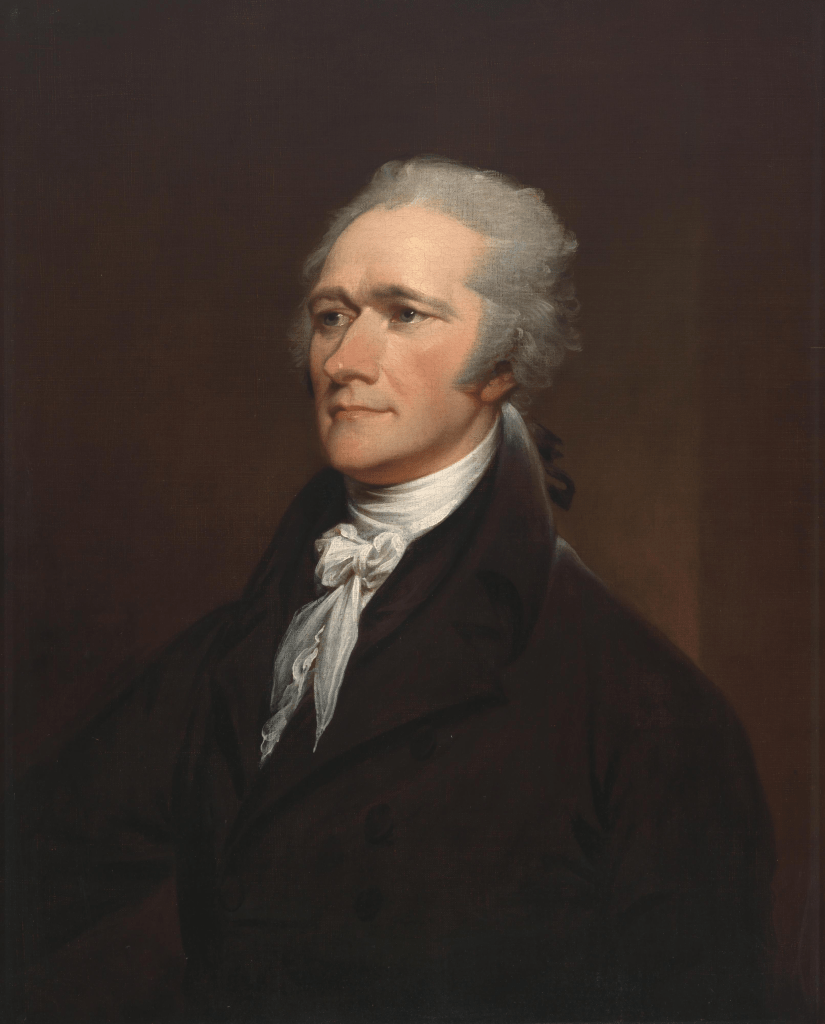
JOHN TRUMBULL. Alexander Hamilton 1804. United States.
Although, many people have reported that Trumbull also painted Aaron Burr, he actually never did. There are no portraits or war scenes of Burr from Trumbull. The one instance that many people point to as the example of Burr in a Trumbull painting is a common misconception. In the painting “The Death of General Montgomery in the Attack on Quebec, December 31, 1775” Burr is often listed as being the man in the center holding up General Montgomery as he dies. The confusion is that in real life Burr was the aide-de-camp for General Montgomery, was present at the battle and did come to the aid of General Montgomery as he died, but in the painting, Trumbull chose to depict someone else in that role. He chose is acquaintance, Mathias Ogden, to be in the position that Burr had in real life. Ogden was present also at this battle in person, but it is unknown why Trumbull would have made the switch. It could have been meant as a slight to Burr or as a favor for Ogden.
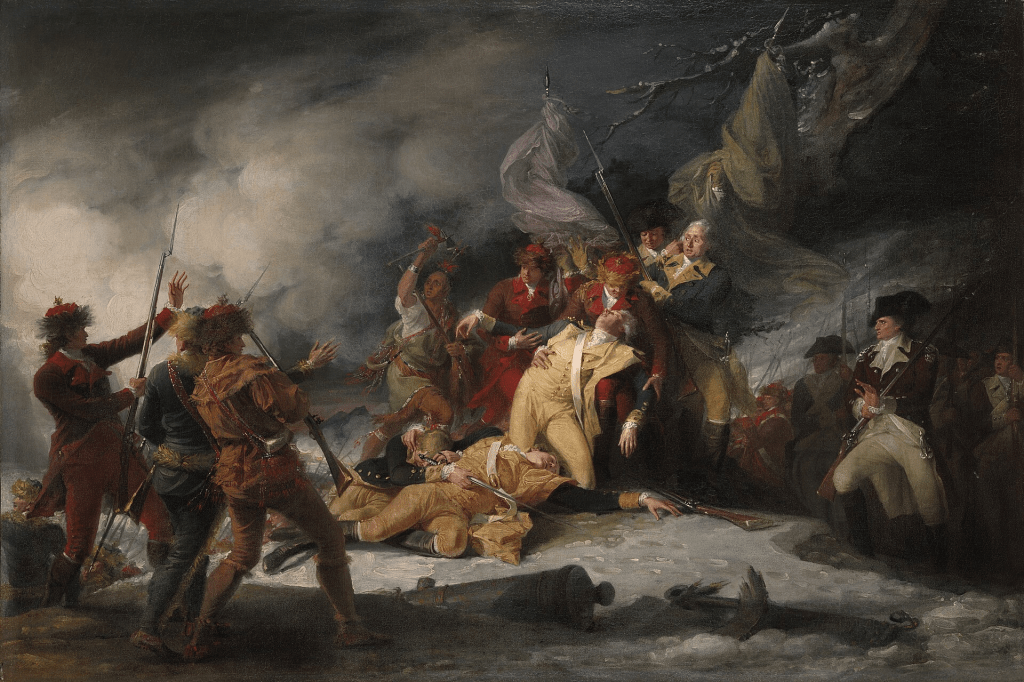
JOHN TRUMBULL. The Death of General Montgomery in the Attack on Quebec, December 31, 1775. United States.
Unlike Burr, Hamilton does appear in one of Trumbull’s Revolutionary War paintings. In the painting “The Surrender of Lord Cornwallis” Hamilton is depicted as one of the officers on the right side of the painting. This was an accurate portrayal of the battle scene since Hamilton was also present in real life.

JOHN TRUMBULL. The Surrender of Lord Cornwallis 1820. United States.
Hamilton is depicted in the row of officers and is located on the bottom row of men, third from the right. Trumbull is often mistakenly listed as being present in this painting, but that is not John Trumbull. On the top row, second from the left is a figure that resembles Trumbull greatly, but that is because it is his older brother Jonathon Trumbull, Jr. who was also present at the Battle of Yorktown and the surrender of Cornwallis.

Brookhiser, Richard. Glorious Lessons: John Trumbull, Painter of the American Revolution.