Trumbull was in England studying under Benjamin West with Gilbert Stuart, when calamity fell. A series of unfortunate events transpired. In the middle of the night, English officers came to Trumbull’s door. They were looking for his roommate, who presumably was still out on the town. Finding only Trumbull at home, the officers began searching the residence. Eventually, with no other suspect in hand, they arrested Trumbull on suspicion of being an American spy. That first night in jail was a rough one for Trumbull, as he was made to share a bed with a recently arrested highwayman. Newspapers were ablaze of the accounts of an American spy in London. One newspaper described Trumbull as a ‘genteel looking man, about thirty-five years of age (he was actually twenty-four)” and that Trumbull had” behaved much like a gentlemen” and had “made no attempt to escape.” The next morning, Trumbull made his views clear, “Treat me as you please, always remembering, that as I may be treated, so will your friends in America [British Prisoners of War] be treated by mine.” This veiled threat did the trick and Trumbull’s situation improved while incarcerated. In America, Major John Andre had just been hanged, a compatriot of Bendict Arnold, and it is likely that Trumbull’s arrest as a spy in England was done in retaliation.
There was much talk about what Col. John Trumbull could have done to land himself in jail. Some said that he was guilty of sending the French charts of the English coastline and the garrison locations. Another rumor was that Trumbull was arrested in an effort to keep his mouth shut because he possessed damming evidence against the British Whigs, specifically the Duke of Richmond and Lord Shelburne which would bring down the English government. One rumor that was absolutely true was that Trumbull had British goods shipped to France and then to America for the benefit for the Continental Army.

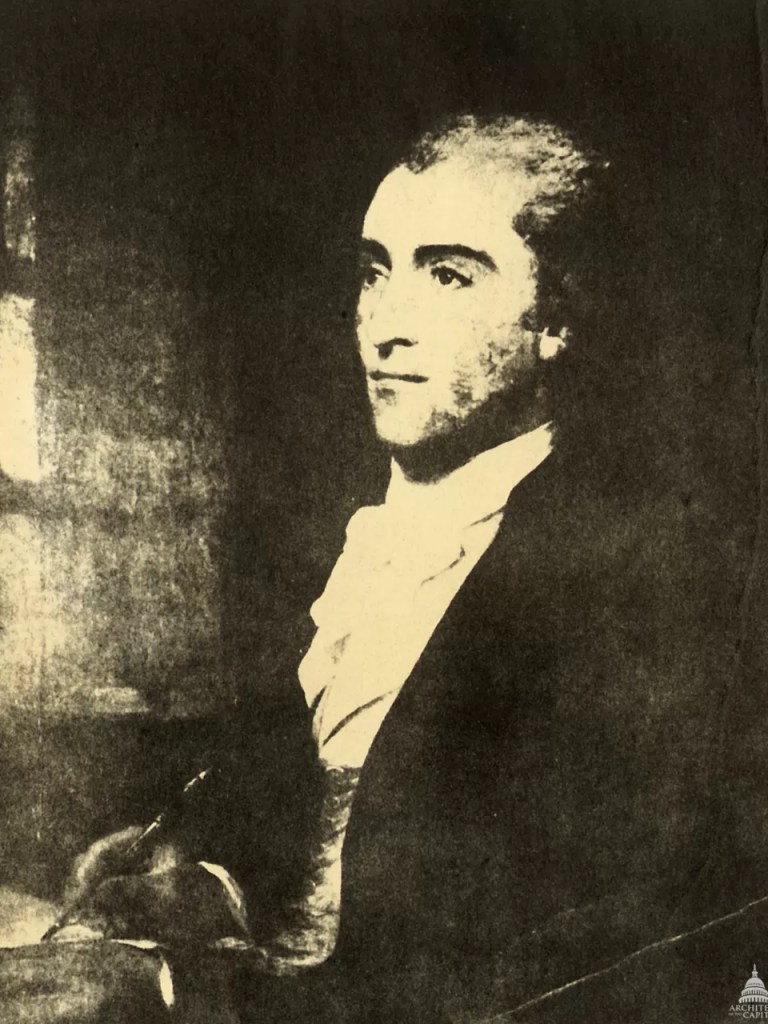
While housed in Bridewell Prison, pictured above, in London, Trumbull spent his time painting. His friends would visit him and bring him projects to keep his mind sharp and his spirits high. It was during this time that Gilbert Stuart painted the first of his two paintings of Trumbull. Gilbert Stuart would often visit and would address Trumbull as “Bridewell Jack” or “Notorious Murderer” or some other similar name as a joke for Trumbull’s pompous nature. Stuart painted only Trumbull’s face in profile. The rest of the painting, Trumbull’s shoulders, his shirt, coat and ruffle were all painted by Trumbull. In the background is a window and if you look closely, you will see the bars, indicating that Trumbull was still an unwilling resident of Bridewell at this point. Trumbull really loved this painting by Gilbert Stuart, though, as he felt that it captured an important season of his life.
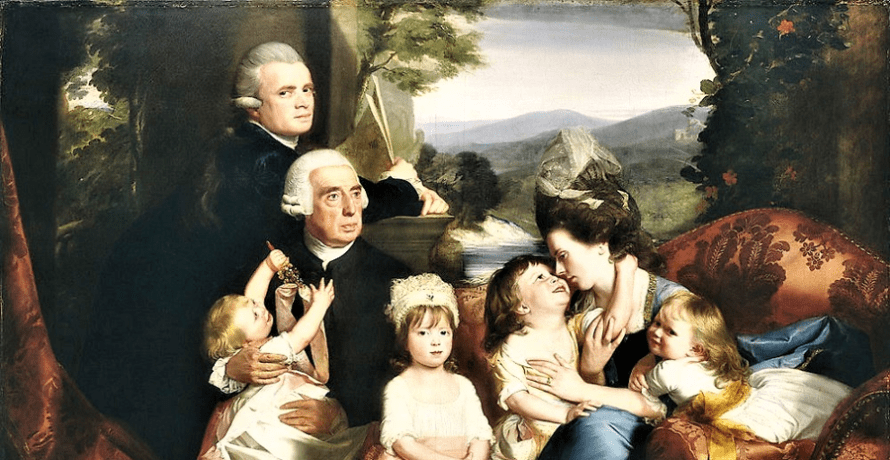
After some months, even with the threat of execution, in June of 1781, Trumbull was released on $400 bail, which Trumbull had come up with half of the bail money and Benjamin West contributed $100 and John Singleton Copley contributed the final $100. Other conditions were that Trumbull must leave England within thirty days, which he did promptly. He left for Amsterdam to journey on a ship to America, but bad luck would continue to plague Trumbull. He would not actually arrive back in America for the next six months. Then, after his ordeal, Trumbull was exhausted both physically and mentally and became ill. He would recuperate until the Fall of 1782.
Sizer, Theodore. “John Trumbull,” Patriot-Painter,” in Northern New York.” New York History 31.3 (1950)
Brookhiser, Richard. Glorious Lessons: John Trumbull, Painter of the American Revolution.