With no other recourse, and finally with the money saved, Trumbull readied himself and went to Harvard to study law. His father had pulled some strings and instead of entering as a Freshman, Trumbull would enter, at the age of fifteen, as a Junior. Trumbull was older than most of the boys in his class and he found it difficult to make friends. His studies, however, were a relief because he found that the tutor he had at home had more than prepared him for Harvard and in most cases, he was ahead of his peers. While there, he studied mathematics and mapmaking. These skills would come in handy because just as soon as he graduated, the Revolutionary War was to begin. Trumbull was adept at Latin and French, much to the surprise and pleasure of his father, who then encouraged him to learn Spanish because it would come in handy as the nation grew with trade. Trumbull never did become fluent in Spanish, and he always regretted it, realizing that his father was correct.
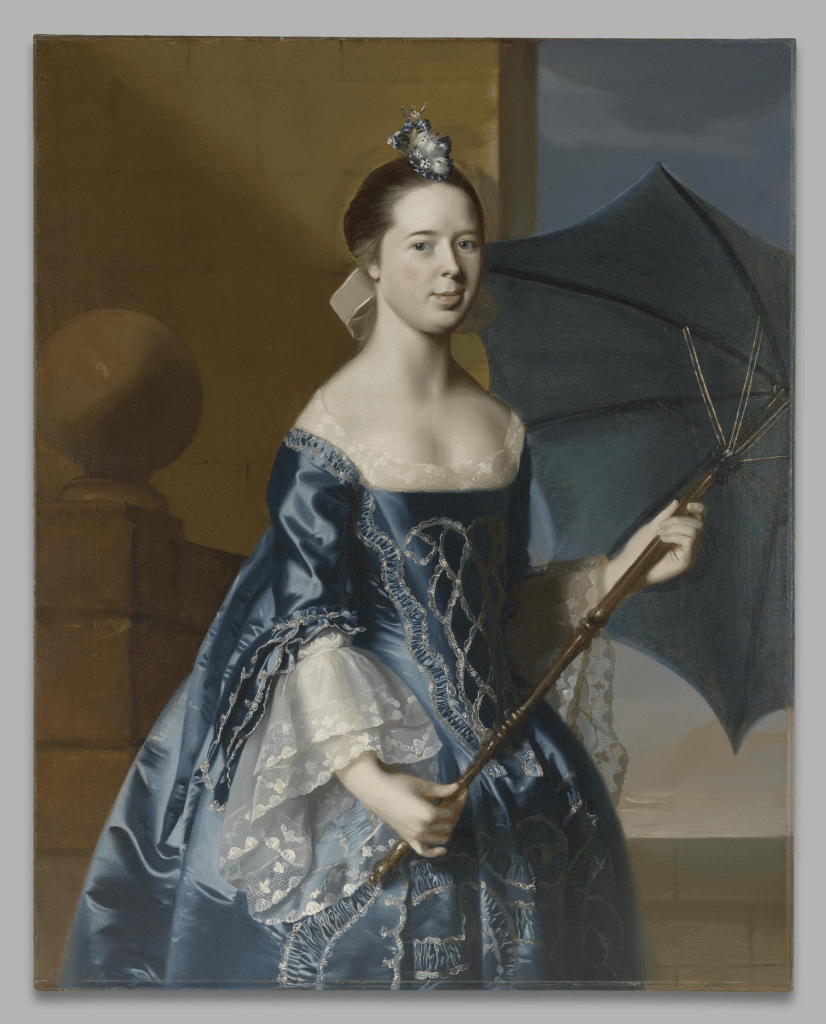
John Singleton Copley, who Trumbull mentioned as a possible tutor, was living in Boston at the time and maintained a studio from 1757-1775 there. In January 1772, while Trumbull was studying at Harvard, his brother came to town and took Trumbull to Boston to view the works of Copley at Copley’s residence. A mutual friend between Trumbull’s brother and Copley joined the party to make introductions. Trumbull writes, “We found Mr. Copley dressed to receive a party of friends at dinner. I remember his dress and appearance- an elegant looking man, dressed in a fine maroon cloth, with gilt buttons- this was dazzling to my unpracticed eye!- but his paintings, the first that I had ever seen deserving the name, riveted, absorbed my attention, and renewed all my desire to enter upon such a pursuit.” Trumbull returned to his studies at Harvard, but his heart was still focused on art. Pictured below is a painting of Mary Toppan Pickman by Copley, completed in 1763 and is indicative of the type of work that young Trumbull would have been admiring in Copley’s home.
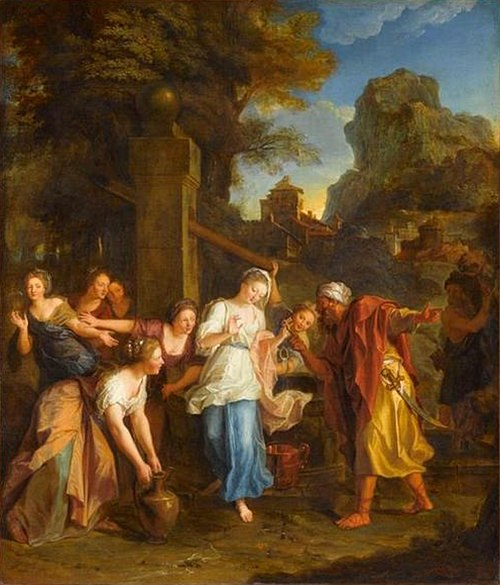
At Harvard, Trumbull writes that he would linger in the college library. He describes himself as timid and awkward while at Harvard. He had difficulty making friends, so the library became a respite. Trumbull would study every book on art that he could find. In particular, he loved “Jesuit’s Prospective Made Easy” by Brooke Taylor. He would sit for hours copying all the diagrams from the book. Another book that he loved at this time was “Hogarth’s Analysis of Beauty.” In the library there was also a philosophical chamber where several of Copley’s paintings were hung. Trumbull calls these his “finest portraits.” Trumbull was also copying engravings to paint. “Rebecca at the Well” by Noel Coypel interested Trumbull and he painted it the same size as the engraving in oil. From the engraving, he could tell forms, characters, expressions, shadows and light, but the colors were open to interpretation. Trumbull said he managed this as well as he could from his own imagination. To his delight, when he showed his painting to others at Harvard and received “much approbation.” This gave him the confidence to show it Mr. Copley, where he “had the pleasure to hear it commended by him also.” Pictured below is a copy of the painting that so captivated Trumbull by Noel Coypel that was painted by his son, Antoine Coypel in 1701.
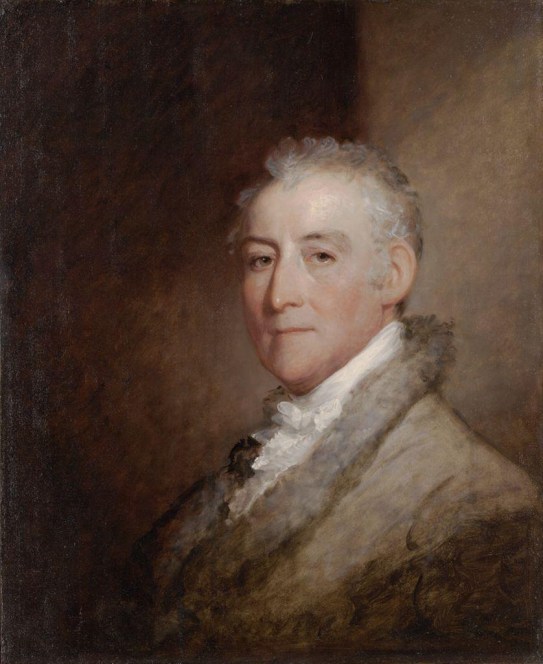
Resigned to his studies at Harvard, Trumbull would graduate a year and half later, at the age of seventeen, giving Col. John Trumbull the honor of being the first American artist that was also a college graduate. He records that he graduated “without applause for I was not a speaker…” Trumbull was not popular at Harvard. He was the youngest in his class and did not have the extra spending money that the other boys had to help him make memories and friends. He writes that he only made one good friend from his time at Harvard, Christopher Gore. This friendship would last Trumbull’s lifetime. The painting by Trumbull of his friend is pictured below.

Sizer, Theodore. “John Trumbull,” Patriot-Painter,” in Northern New York.” New York History 31.3 (1950)
Brookhiser, Richard. Glorious Lessons: John Trumbull, Painter of the American Revolution.