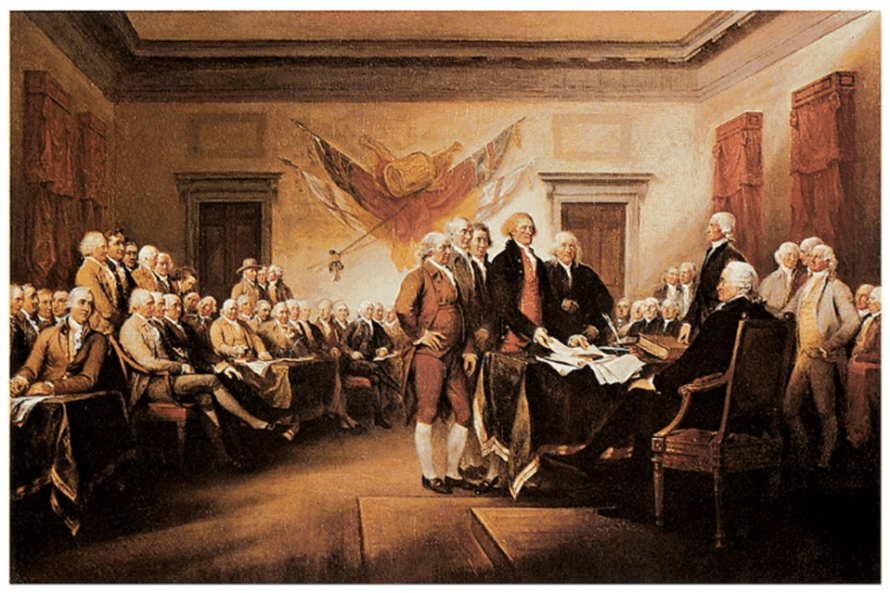
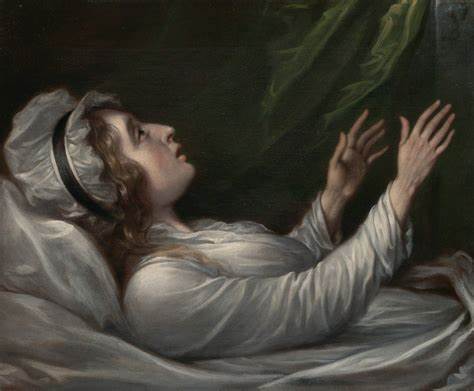
In addition to the well-known “Declaration of Independence,” Trumbull also painted two important paintings of Washington that hang in the Capitol Rotunda. The painting of Washington handing in his resignation called, “The Resignation of General Washington” is another study of the social register in Revolutionary America. This painting, besides the significance of who is represented, holds more historical significance. Washington willingly handing back the power of the early American government was a symbol that America was not a monarchy.
This painting is the embodiment that we would be ruled by ordinary people for a period, and then, without warfare, would pass the power to the next person in charge. Washington, formally attired in his military uniform, stands in the center of the painting surrounded by other notable people of the day. Once again, Trumbull has taken artistic license by adding people who were not actually in attendance but whom he thought were symbolically important were included. Specifically, Martha Washington is depicted with her three grandchildren standing on the balcony, but none were present. Artists like Trumbull would often add people who were not present but were special to the subject matter or the artist himself.


John Trumbull, The Resignation of General Washington, at Annapolis, Maryland, December 3, 1783, 1824, United States Capitol.
Also in this painting, Trumbull chose to include Harriet Wadsworth, pictured below. She is standing beside Mrs. Washington and the children on the balcony. Trumbull had hoped to marry her but she inhad died young from tuberculosis. Trumbull’s courtship of Harriet had been a period of disappointment. She was a solid choice for marriage, as the Trumbull family and the Wadsworth family had been friendly for years. Harriet was a friend of his niece’s and Trumbull had watched her grow up. Now, after some years apart, he looked upon her with new eyes and wished to start a family. Harriet was reticent, as Trumbull was a stoic suitor, and not very demonstrative with his affections. Stirring up his courage, Trumbull wrote to her, “You have seen and cannot have misunderstood my attentions… but may I not hope, Harriet, from the candor and kindness of your character, that had you disapproved those attentions you would have discouraged them without disguise.” Trumbull is saying that he has made his intentions as clear as he can, and since she has not stopped him, he believes that the relationship will go forward. In this, he was mistaken. Soon after, Harriet rejected his proposal, possibly because she was suffering from what was deemed consumption, what we know now as Tuberculosis. She traveled to Bermuda, hoping that the tropical climate would help her, but she died soon after. Trumbull’s pride was sore from this ordeal. He was a sensitive man by nature, and deeply affected by Harriet’s personal rejection of him. His contemporaries often thought him cold and unfriendly, but in reality, he was protecting a sensitive interior.
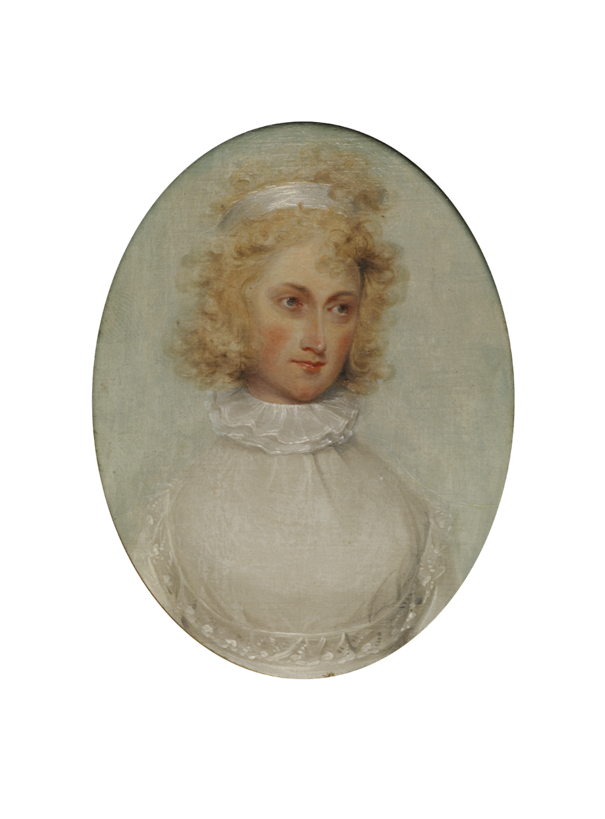
JOHN TRUMBULL, HARRIET WADSWORTH, 1793, UNITED STATES.
Brookhiser, Richard. Glorious Lessons: John Trumbull, Painter of the American Revolution.