To restart his career in New York, Trumbull concentrated on portraits which were an easy source of revenue. Always haughty, Trumbull had mixed feelings about this easily earned source of income. Trumbull spending his time on portraits felt painfully beneath him. Trumbull once told Jefferson that he believed portraiture was “frivolous, little useful to society…
After the American Revolution and during the time of the War of 1812, Trumbull would move to Europe, mostly London, and then return to America four different times. While living in England, between 1785- 1789, Trumbull would take time off from painting for the security of being a Diplomat with a salary. He had worked…
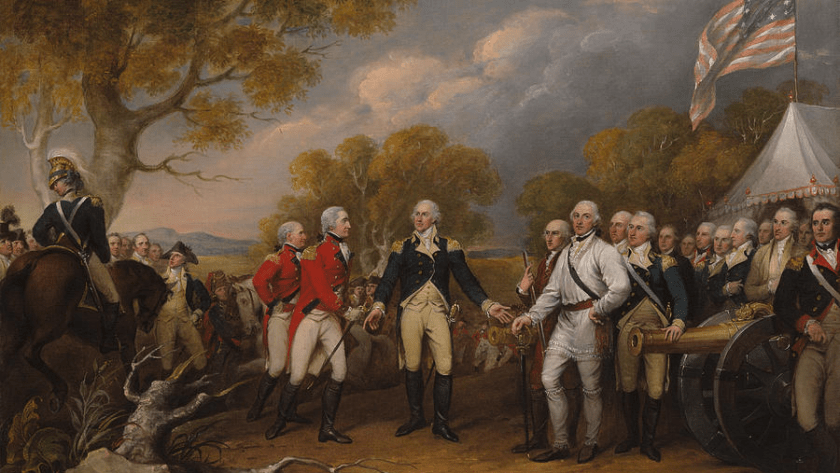
The fourth painting of Trumbull’s that is housed in the Capitol Rotunda is “The Surrender of General John Burgoyne.” General Burgoyne shares the central position with General Horatio Gates of the Continental Army. Authentic to the battlefield, this painting records well what a Revolutionary battlefield looked like, sounded like, and felt like. This is likely…
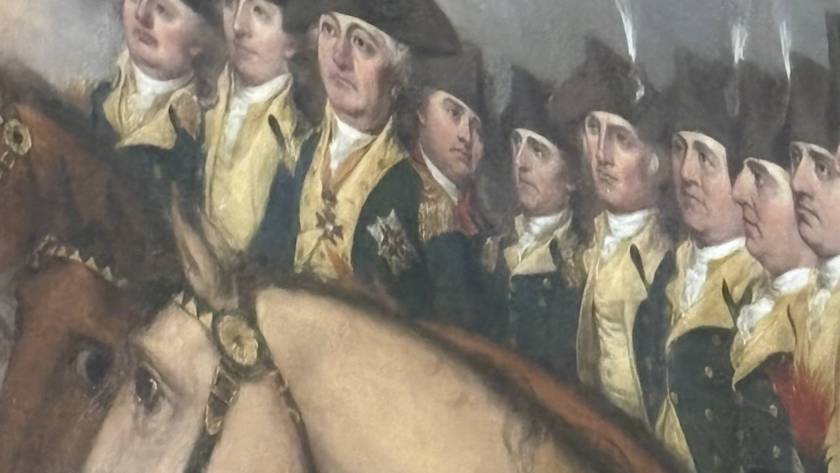
The third painting of Washington by Trumbull to hang in the Captiol Rotunda is called “The Surrender of Lord Cornwallis” and depicts a real event that happened during the Revolution in 1781. This painting confuses people. The first confusing detail is that Cornwallis is absent from the painting that bears his name. The second…