To restart his career in New York, Trumbull concentrated on portraits which were an easy source of revenue. Always haughty, Trumbull had mixed feelings about this easily earned source of income. Trumbull spending his time on portraits felt painfully beneath him. Trumbull once told Jefferson that he believed portraiture was “frivolous, little useful to society and unworthy of a man who has talents for more serious pursuits.” Painting wealthy people’s portraits was a major step down in Trumbull’s estimation. Trumbull had previously called this portraiture “…the servant of vanity…” and “…trumpery and nonsense…” and now this was how he was to make his living. The good news was that he could charge good money for this vanity. Trumbull charged $500 for a full-length portrait, and $250 for a half-portrait. If the portrait was to be a bust with hands, he would charge $150, and without hands, he would charge $100. Trumbull would soon recover his artistry and confidence.
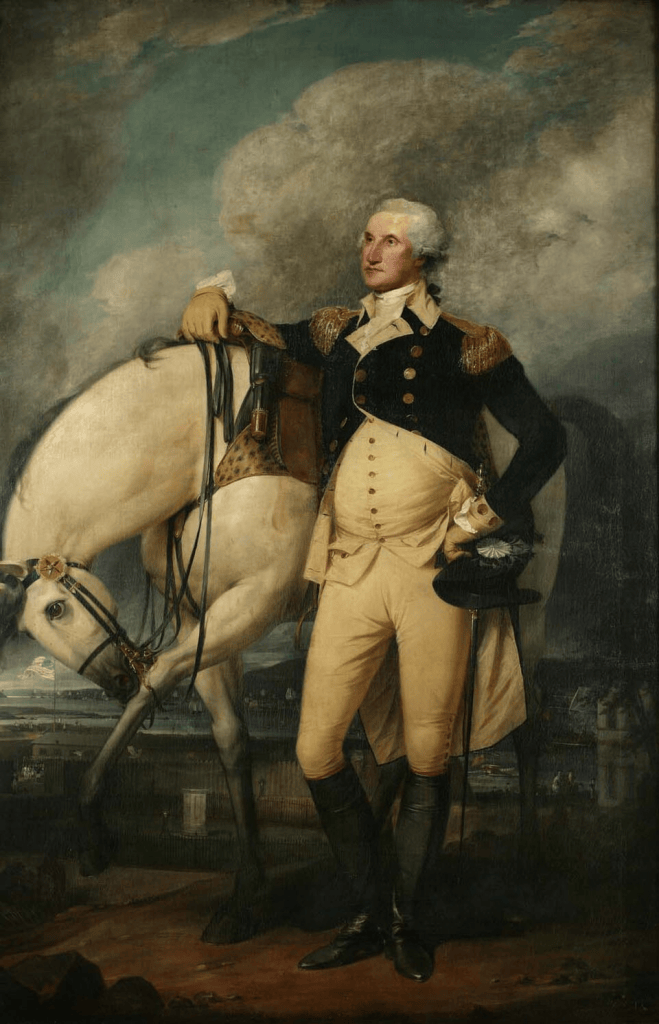
Trumbull would be successful in New York painting portraiture. He earned as much as $4000 annually painting portraits of New York society and the political elite. He was commissioned to paint a series of prominent New Yorkers to hang beside his painting of Washington, pictured above, in New York City Hall. This painting of Washington was an act of bravery on Trumbull’s part. Because of his accident as a child that left him with sight in only one eye, he had trouble with scale in larger paintings. Many people, including his mentor Benjamin West believed that Trumbull should stick to smaller scale paintings and miniatures. A letter survives from Trumbull to West written in August of 1790 that speaks of this large scale portrait of Washington. In part it reads, “I have several small portraits of the President … one in particular which I have done for Mrs. Washington a full length about 20 Inches hight … is thought very like—& I have Been tempted to disobey one of your injunctions & to attempt a large Portrait of him for this City which I am now finishing—the figure is near seven feet high compos’d with a Horse, & the back ground the evacuation of this Place by the British at the Peace:—the Harbour & Fleet with a Part of the fortifications & Ruins of the Town:—How I have succeeded I hardly dare judge:—the World have approved the resemblance, it is to Hang in the most elegant Room in America & in a very perfect light.” This paintng of Washington and collection of prominent New Yorkers is still on view today. New York had overtaken Philadelphia as the largest city in America so there was no shortage of portraiture customers for Trumbull.

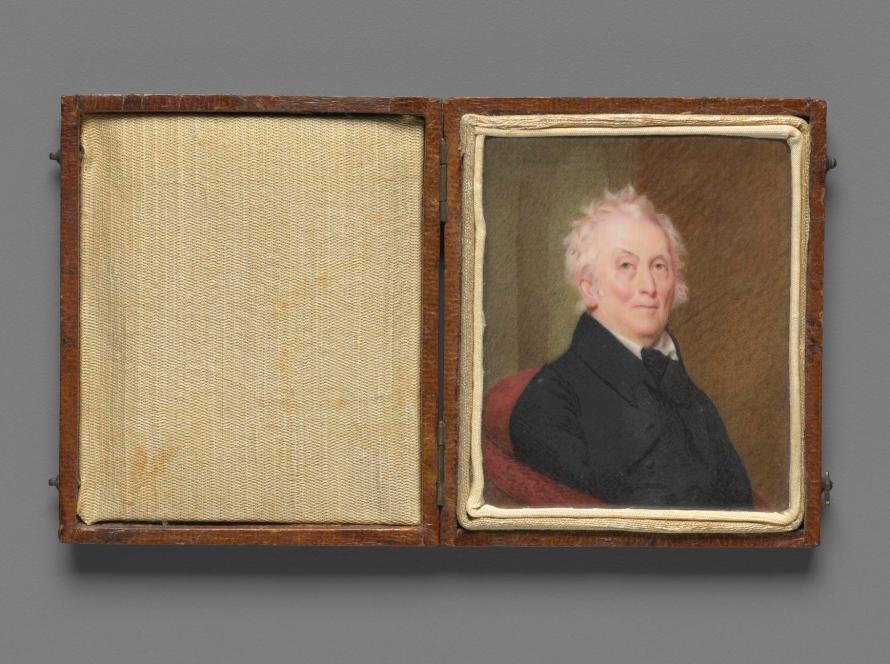
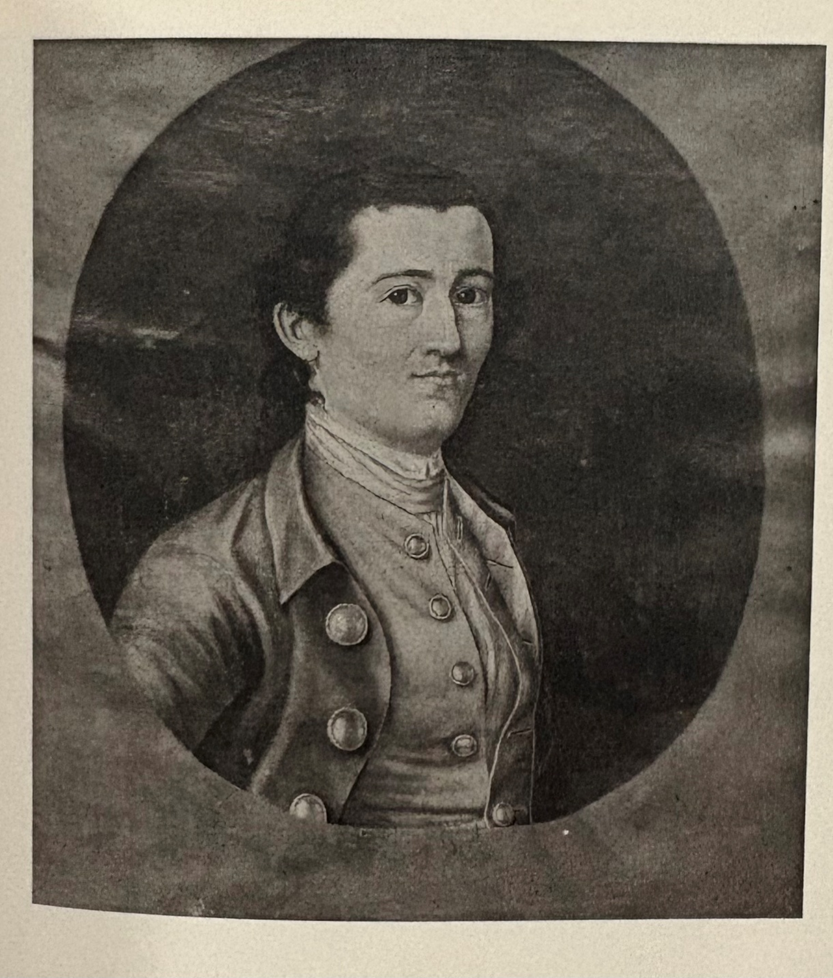
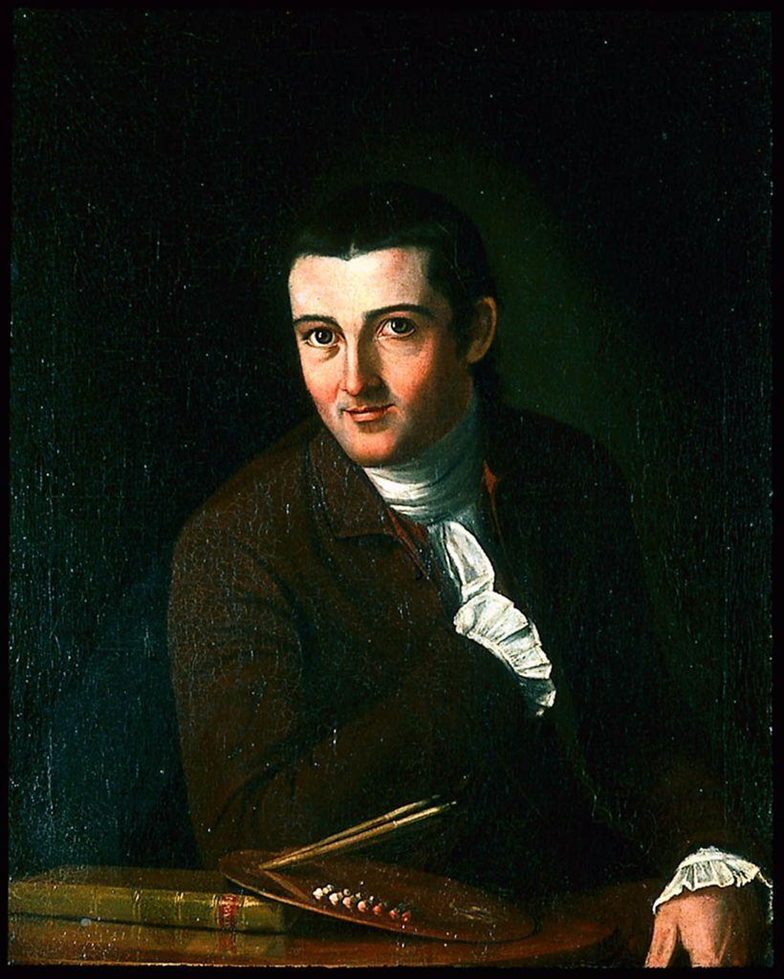
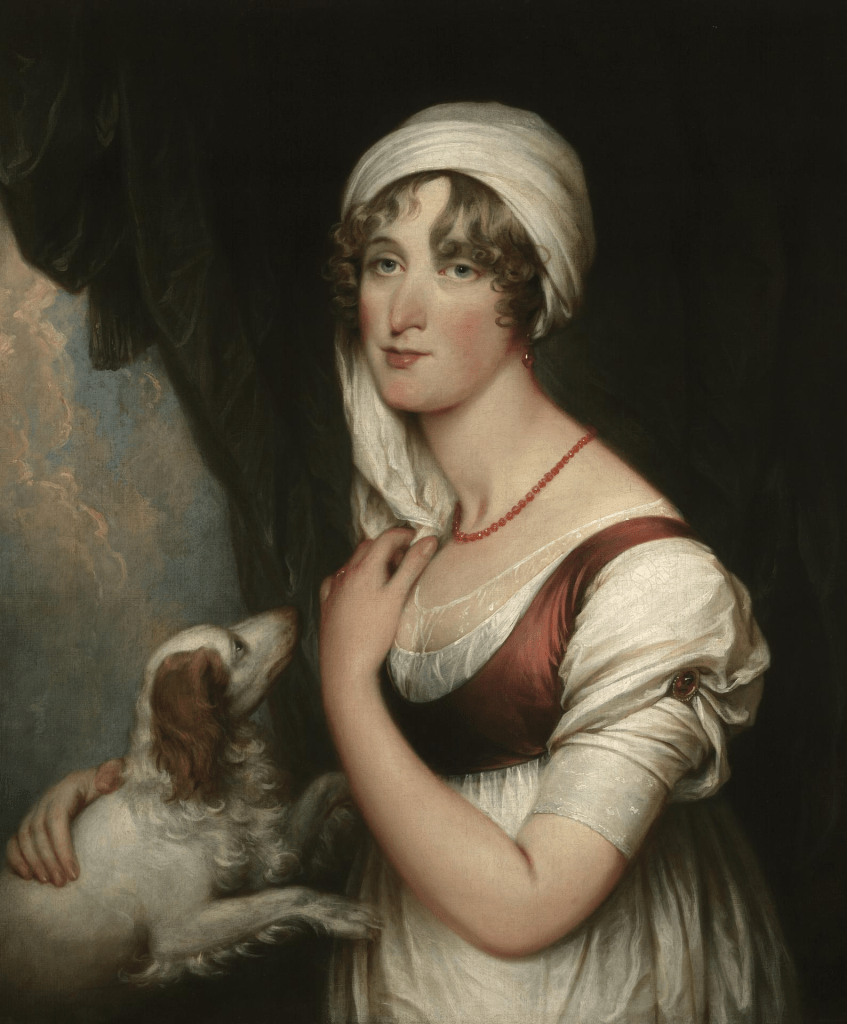
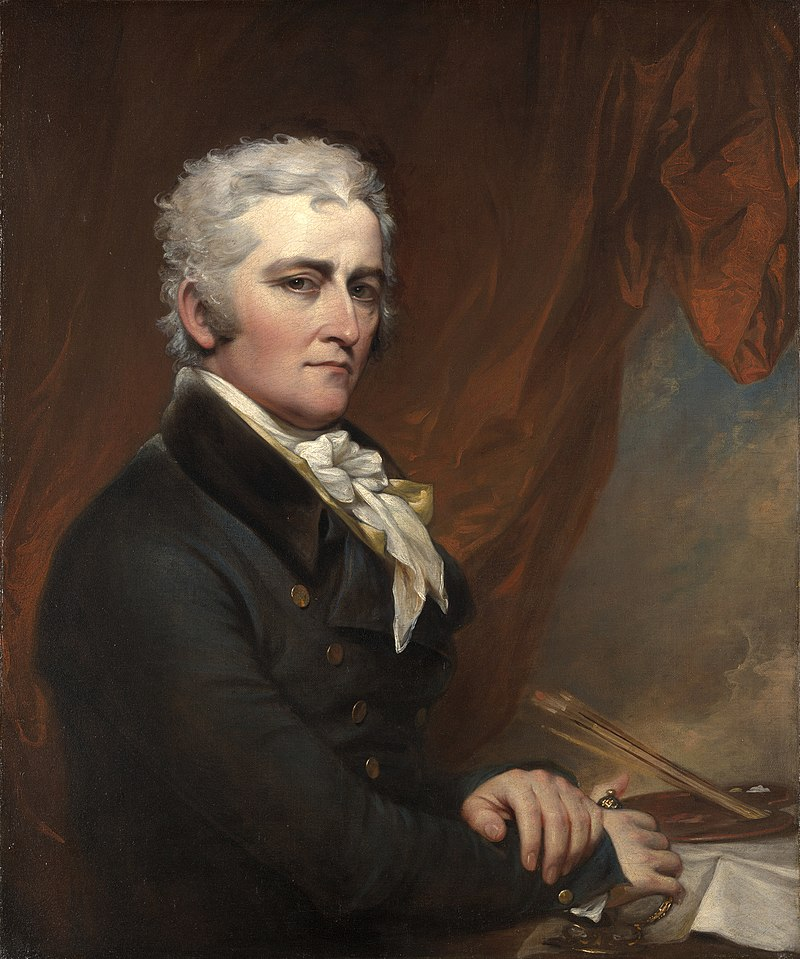
Trumbull painted the portraits of the most notable people of the day, such as Washington, Alexander Hamilton, and John Adams. He painted the wealthy elite, such as his friend Rufus King, pictured above, and his wife. Trumbull painted his family of origin in portraits over the years. Over his lifetime, he also painted several self-portraits. The first one, picyured below, was in 1774 when he was only eighteen years old. This portrait is from the waist and shows Trumbull formally dressed and turned to the side. He looks directly at the viewer and the purpose of this portrait appears to be to record his likeness. Trumbull’s next youthful self-portrait was painted in 1777 when Trumbull was only twenty-one. This self-portrait, pictured below, is slightly different because here Trumbull is not only recording his likeness, but he is also recording his profession as an artist. He sits at a desk leaning towards the viewer. He is slim with his dark hair tied back. He is well dressed in a coat with a white shirt with frilly cuffs peeking from under the sleeves of the coat. On the desk in front of him, he holds a painter’s palette which partially rests on a copy of a book by William Hogarth. There is a reflection of the book on the table which is a nod to Copley, who Trumbull admired, and his tendency to include reflections in his painting. In this painting, Trumbull is experimenting with the S-curve that he learned in his Hogarth book. Both works resemble Copley’s style of portraiture, and especially the sitting position is reminiscent of Copley’s “Paul Revere.” In 1802, Trumbull would paint another self-portrait that was the partner portrait to the painting of Sarah Trumbull with the Spaniel. It is thought that these two portraits were meant to hang side by side with the sitters facing each other. Both paintings are pictured below. Trumbull would complete this self-portrait near the time of his marriage. He is 46 years old. Trumbull’s hair is now worn short and has grayed over time. He is handsome with his dark eyebrows and sideburns. His looks have matured. He appears to be a man at the height of his influence. He sits erect in his chair, sitting to the side but his head is turned to stare firmly and directly at the viewer. He is dressed formally in a coat with a white dress shirt. One hand rests on the hilt of a sword, while the other hand holds a painter’s palette. In this portrait, Trumbull is showing the world what he has accomplished.
Staiti, Paul. Of Arms and Artists: The American Revolution through Painters’ Eyes.
Brookhiser, Richard. Glorious Lessons: John Trumbull, Painter of the American Revolution.
Cooper, Helen A., editor. John Trumbull: The Hand and Spirit of a Painter.
Sizer, T. (1951). A NOTE ON TRUMBULL’S EYESIGHT, A LETTER TO BENJAMIN WEST. The Yale University Library Gazette, 26(2), 91–93. http://www.jstor.org/stable/40857535