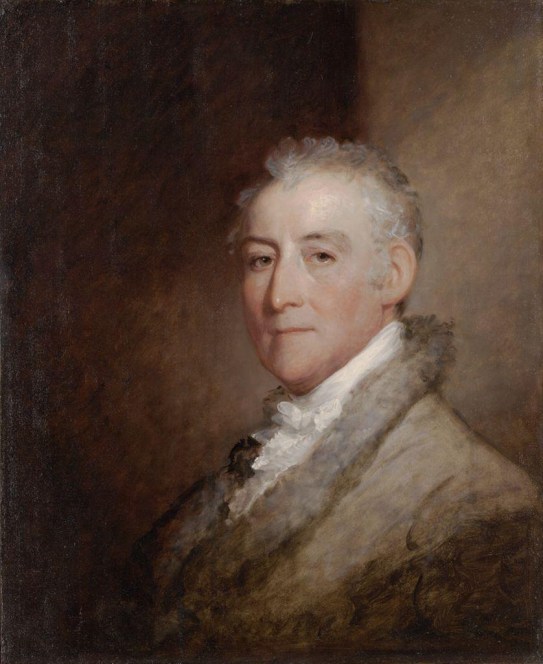
Trumbull, as a youth, was a good student. His father was determined that his son made a dependable living and not as an artist, as Trumbull was hoping. Trumbull, at this time, was well into his teens and was adamant that he wanted to be an artist. His father wanted no part of that. The elder Trumbull is said to have noticed that Trumbull wanted to be a limner. A limner at this time was a traveling artist who painted for the barest subsistence. The use of this word shows the disdain that the elder Trumbull held for art as a profession. Young Trumbull would have understood the negative implications.

. JOHN TRUMBULL, SELF PORTRAIT, 1773. UNITED STATES.
However, Trumbull’s ambition was to be a great history painter, not just a neighborhood limner. While arguing about what Trumbull should do when he grew up, his father pronounced that he should become a lawyer, not a painter. Young Trumbull responded that lawyers only dealt with the vices of men, and he wanted to do something far greater with his life, like the men in ancient Athens. To his father, Trumbull explained that he “wished to glorify his country as ancient artists had glorified Athens.” Trumbull recalls, “My father listened patiently and when I had finished, he complimented me on the manner in which I had defended what still appeared to be a bad cause.” His father replied that with argumentative skills such as that, Trumbull would make a fine lawyer, and “anyway, Connecticut was no Athens!” Trumbull said his father then took a bow and never brought the subject up again.
Brookhiser, Richard. Glorious Lessons: John Trumbull, Painter of the American Revolution.