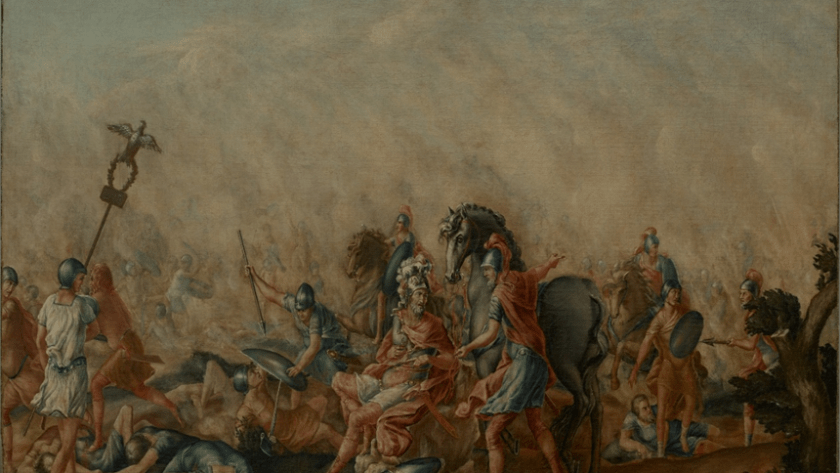
The first historical painting that Trumbull tried his hand at was “The Death of Paulus Aemilius at the Battle of Cannae.” Painted in 1773, Trumbull borrowed figures from several engravings and then pieced together this scene. This painting’s central figure is Roman Consul Paulus Aemilius, who was wounded and given the chance to escape on…
Trumbull’s father, who had used his weight to get Trumbull late admission to Harvard once again used his influence on behalf of his youngest son when the Revolutionary War began. The elder Trumbull made sure that he was given duties in the Continental Army where he would generally not be in direct combat. Trumbull was…
Trumbull, as a youth, was a good student. His father was determined that his son made a dependable living and not as an artist, as Trumbull was hoping. Trumbull, at this time, was well into his teens and was adamant that he wanted to be an artist. His father wanted no part of that. The…
Early American artists often traveled from city to city to study and to paint the portraits of notable members of society and the wealthy elite. Many times, these artists also had higher aspirations of becoming history painters, but always they had to earn a living. Portrait commissions were the most reliable way for an artist…
Through his portraits of Sarah Hope Harvey Trumbull, Col. John Trumbull advanced beyond his monumental history paintings to explore intimacy and early American identity that revealed how their personal relationship shaped a softer, more private dimension of Trumbull and early American portraiture. Though often overshadowed by her husband’s fame as the “Painter of the American…
There is no record of what Harvey might have died from. A little over a year before her death, she and Trumbull were visiting his relatives when his nephew records that he had never seen Harvey look so bad. Harvey's notice of death in The Evening Post newspaper based in New York reads on Monday,…
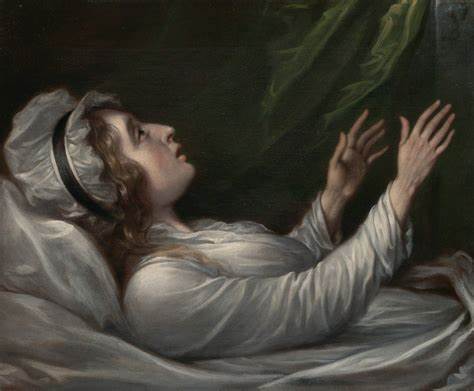
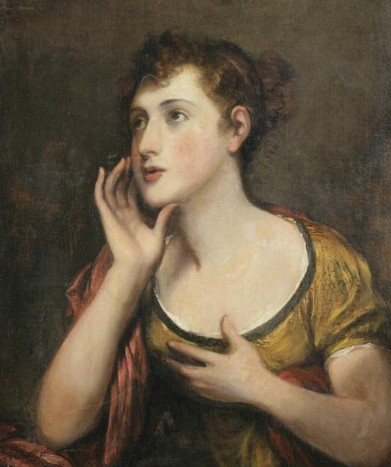
This painting is unlike the other portraits that Trumbull painted of his wife. This painting feels more intimate, perhaps because it is not posed but it is a moment. Harvey does not look at the viewer but looks directly above in a plaintive way. Is she looking toward heaven or a loved one? Is she…
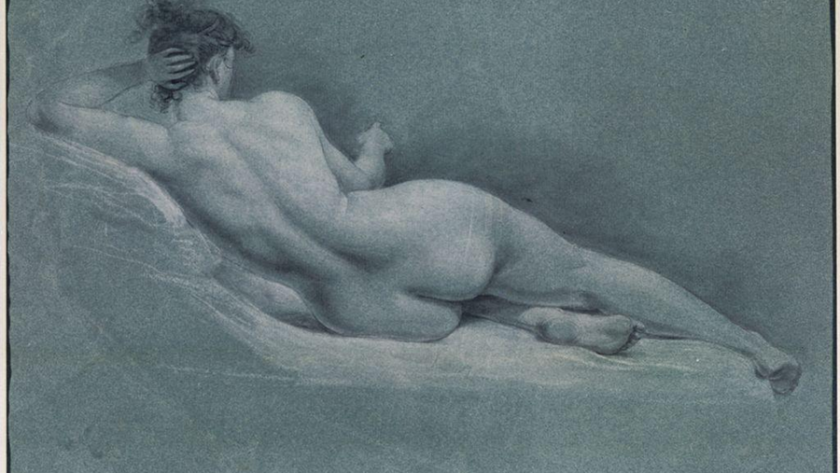
In the collection given to Yale University for the Trumbull Museum, there is a set of nude sketches in a folder. These are important by themselves because they make Trumbull the first known American practitioner of an academic life study. [1] Three of these nude sketches appear to show Mrs. Trumbull reclined in poses for…
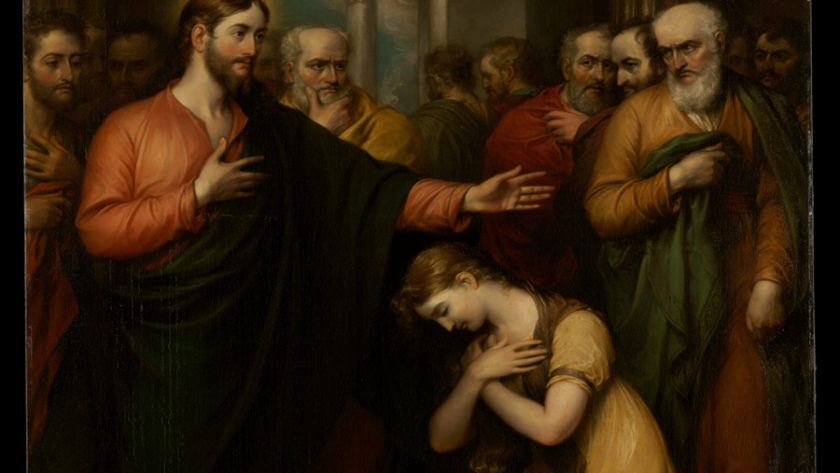
Living in England, trying to sustain them financially painting portraits of well-to-do society members, Trumbull also tried his hand at many religious and some political scenes. One of the best examples is “The Woman Taken in Adultery,” painted in 1811. This is a large painting measuring almost 8 feet tall and five feet across. Trumbull…
This painting is part of a collection of paintings that Trumbull painted after the couple had left New York and moved back to London. The economy in New York had become increasingly financially strained and so commissions for portraits had become increasingly scarce. [1] Trumbull and Harvey thought that moving back to England might be…
Trumbull’s portraiture was different when he painted his wife, Harvey. There is less formality and more warmth. He often painted her during life transitions, such as her wedding introductory portrait and the portrait that he painted of her in 1805, upon their return to America from England. The portraits that Trumbull painted of Harvey, besides…
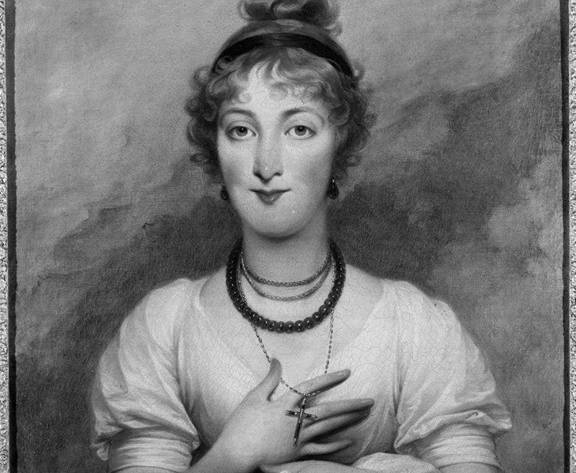
Harvey, shown in a billowy white dress, exudes innocence in this portrait. This is exactly the message that Trumbull hoped to send to his family. Her strawberry blonde hair is tied up in a bun high on her head. She has curls that have come loose that surround her face. Harvey wears a headband or…