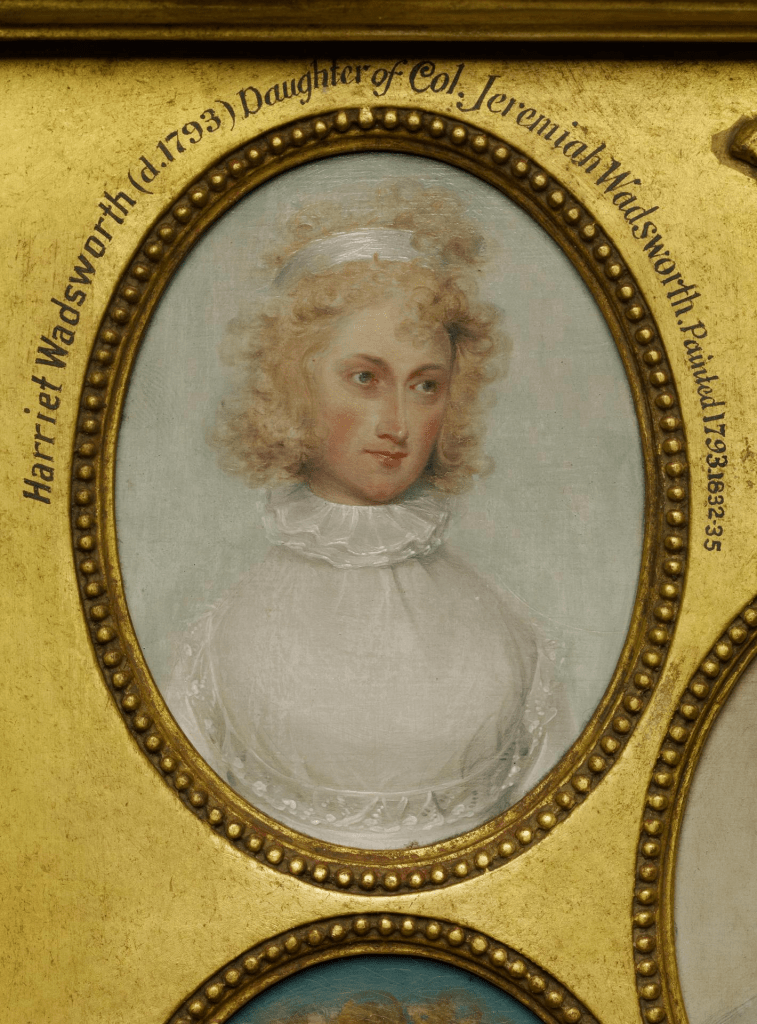
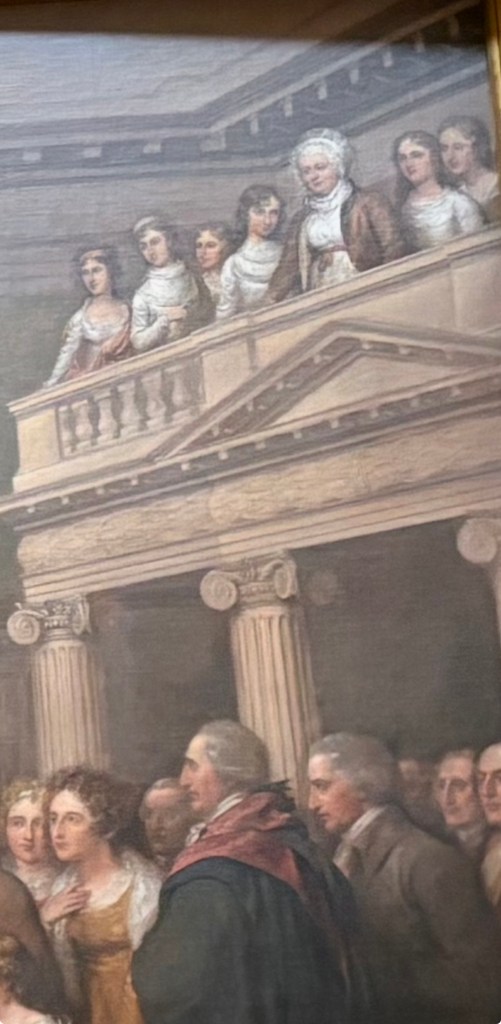
Trumbull painted many miniature portraits. These were not the usual types of miniatures that were used as decoration. These types of miniatures were often painted with watercolors on ivory. Trumbull’s miniatures were different because, although small, they were done in oil on mahogany. Painted with impastos and glazing techniques, Trumbull’s miniatures show texture and depth. Trumbull’s miniatures were among the most accomplished artistic achievements of his career. Trumbull’s miniature of Harriet Wadsworth, pictured below, was painted after her untimely death from consumption. Trumbull had hoped to marry her. They were close family friends and cousins. She had been a friend of his niece’s and Trumbull had watched her grow up. Now, after some years apart, he looked upon her with new eyes and wished to start a family. Harriet was reticent, as Trumbull was a stoic suitor. He was not very demonstrative with his affections, but he would write her letters. Stirring up his courage, Trumbull wrote to her, “You have seen and cannot have misunderstood my attentions… but may I not hope, Harriet, from the candor and kindness of your character, that had you disapproved those attentions you would have discouraged them without disguise.” In a round about way in this letter, Trumbull is telling Harriet that he is sure that if she did not also like him, she would have already rebuffed his advances. Unfortunately, she did refuse his proposal claiming her illness as an excuse. She was suffering from Consumption or Turberculosis. She would die soon afterwards. Painted from memory and based on a sketch he had completed before her death, this miniature is a great example of the “sensitivity of characterization” that Trumbull’s miniatures were known for. Later, Trumbull is said to have included the likeness of Hariiet Wadsworth on the second woman from the left on the balcony of “The Resignation of General George Washington.” A close-up of the balcony from this painting is included below.
Whether Trumbull was painting full-scale portraits or small-scale miniatures, these portraits all had the same intent. That was to capture the essence of the person at that time in their life. Except for in the cases of especially notable people, such as Washington, where the portrait would be immediately on display, these memories were meant to be shared domestically. The visual biography would only have been interesting to a few people. Now, we view early American portraiture as a historical record, of families, associations, and culture. We interpret the image and countenance of a person through the subjective lens of the artist’s eyes.
Cooper, Helen A., editor. John Trumbull: The Hand and Spirit of a Painter.
Brookhiser, Richard. Glorious Lessons: John Trumbull, Painter of the American Revolution.