Portraits made in the past are open to interpretation in the future. Without the artist giving background information, the viewer provides the historical account. Trumbull’s paintings of Harvey challenge this rule, however. He painted her not just as a record of her life, but there seems to be a deeper reason. He did not need to paint her so many times, the implication is that he loved to paint her so many times. The act of Trumbull adding Harvey to religious compositions appears to show in action what he said in his own words about how he would rather remain in memories of Harvey than spend time with anyone else.
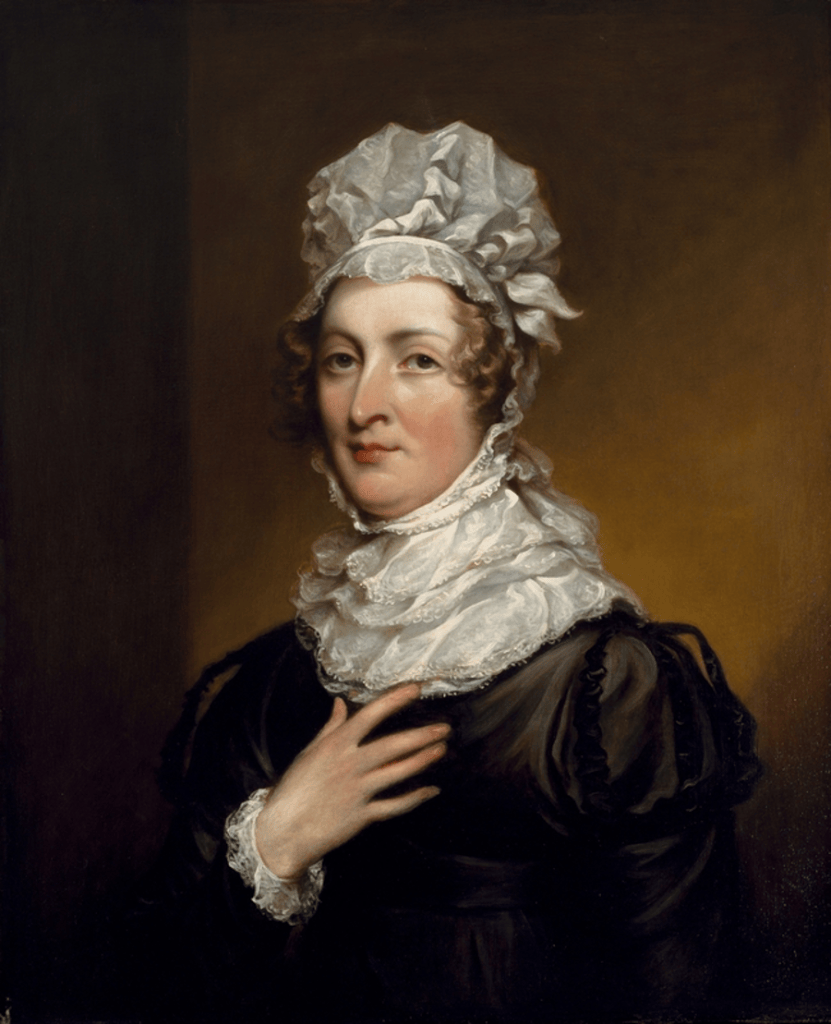
JOHN TRUMBULL, SARAH HOPE HARVEY TRUMBULL, 1816-1824, UNITED STATES.
The last two portraits of Harvey were of special significance to Trumbull. Enough so that he kept them hung in his own bedroom until his death, although the deathbed scene he kept curtained. Both special portraits are now the property of museums and have an afterlife that Trumbull might not have intended. This is the predicament that Trumbull found himself in. How to navigate personal portraits that would enter the public sphere and how other people would understand the narrative.
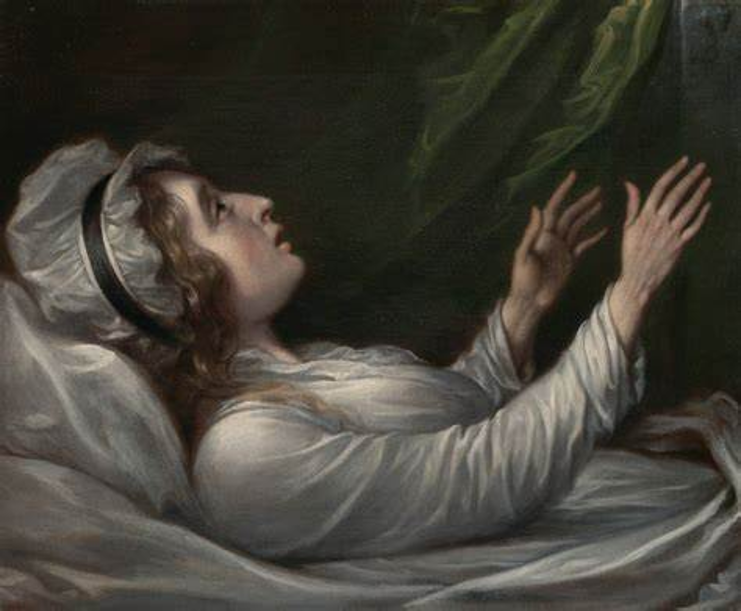
JOHN TRUMBULL, SARAH TRUMBULL ON HER DEATHBED, 1824, UNITED STATES.
In a time when there was an expectation of how women would be portrayed in portraiture, feminine, affectionate, and refined, Trumbull expanded the genre. Women were often seen as possessing a single type of commodity, such as their beauty. On this, they could trade for other things of value, like security. Trumbull’s continued portraits of Harvey give her importance in his life apart from her beauty, as a muse and as a partner, that few women achieved in that period. Trumbull personified Harvey and then allowed the viewer to understand a little of their relationship through his visual accounts of her. In the end, Trumbull’s portraits of Harvey constitute all the viewer truly needs to know of Harvey because we know her through his visions of her.
Brookhiser, Richard. Glorious Lessons: John Trumbull, Painter of the American Revolution.
Pointon, Marcia. Hanging the Head: Portraiture and Social Formation in Eighteenth-Century England. Yale University Press, 1993.