After the American Revolution and during the time of the War of 1812, Trumbull would move to Europe, mostly London, and then return to America four different times. While living in England, between 1785- 1789, Trumbull would take time off from painting for the security of being a Diplomat with a salary. He had worked…
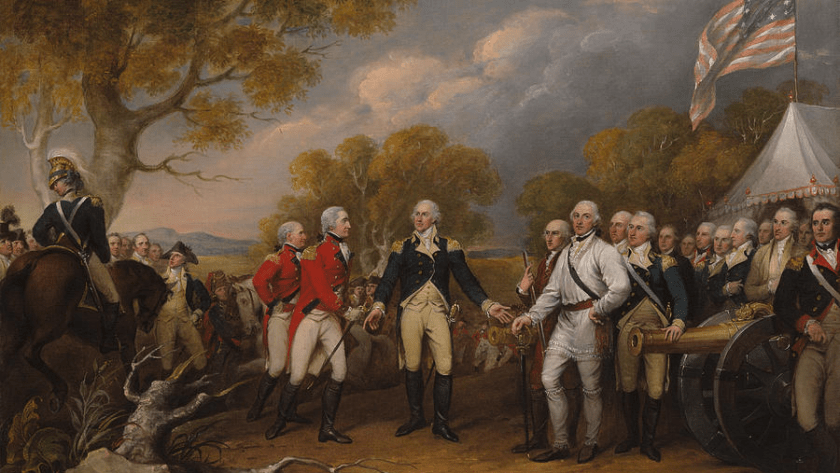
The fourth painting of Trumbull’s that is housed in the Capitol Rotunda is “The Surrender of General John Burgoyne.” General Burgoyne shares the central position with General Horatio Gates of the Continental Army. Authentic to the battlefield, this painting records well what a Revolutionary battlefield looked like, sounded like, and felt like. This is likely…
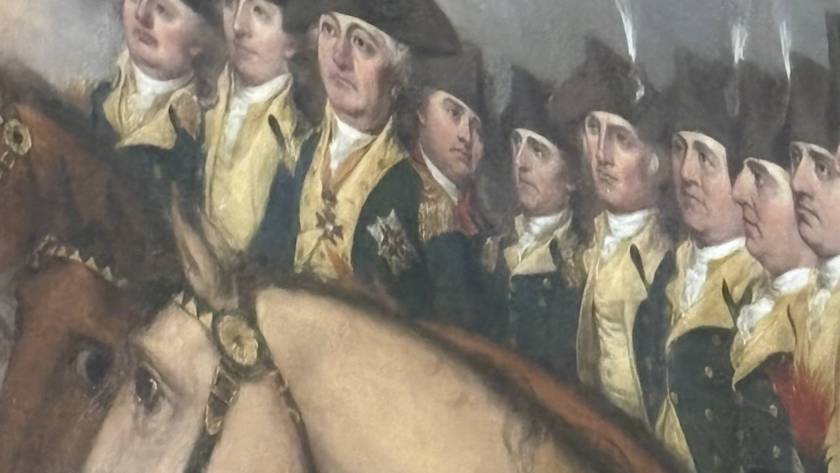
The third painting of Washington by Trumbull to hang in the Captiol Rotunda is called “The Surrender of Lord Cornwallis” and depicts a real event that happened during the Revolution in 1781. This painting confuses people. The first confusing detail is that Cornwallis is absent from the painting that bears his name. The second…
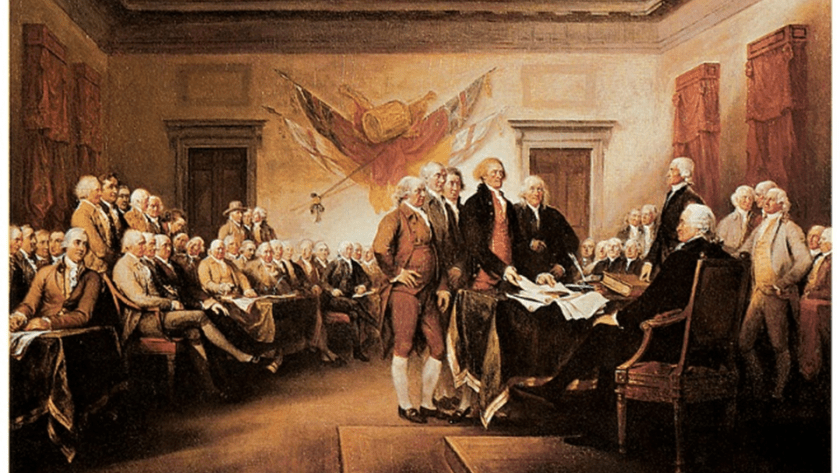
When the commission of the paintings for the Capitol Rotunda was being discussed, Trumbull was desperate to be chosen. This seemed to him to be the culmination of what he had worked for all his life. To this, he swallowed his pride and wrote to Jefferson asking for his endorsement. Jefferson, remembering their earlier days…
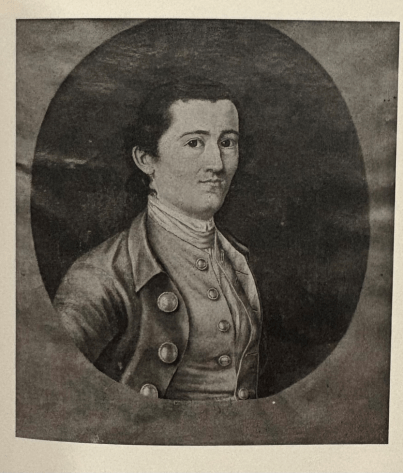
John Trumbull. Jonathan Trumbull, Sr. (1710–1785), LL.D. 1779.
Young Trumbull did have two incidents in childhood that bear mentioning. The first was that as a baby, he would suffer convulsions, often having three of four a day. By the time he was nine months old, the convulsions had been increasing in both number and severity…
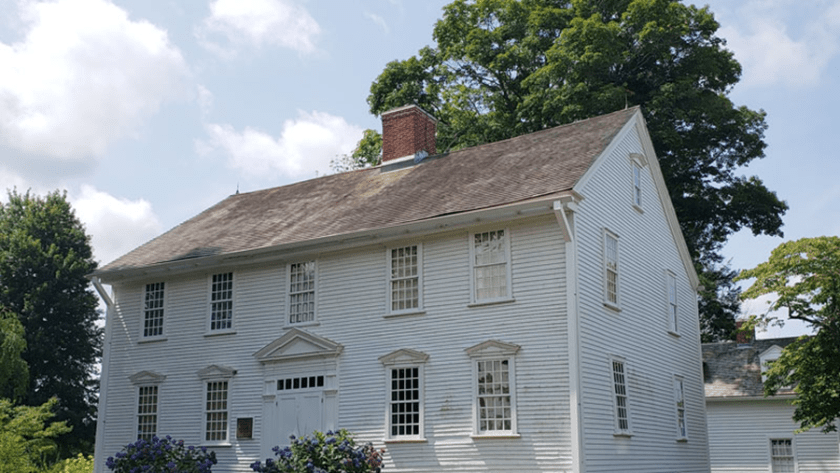
. The Trumbull family had their roots in early America from the time the colonies began. There is a John Trumbull listed on documents starting in 1640 in Massachusetts who hailed from England, near the Scottish border. He was believed to be the first ancestor of Col. John Trumbull to live in America from their…
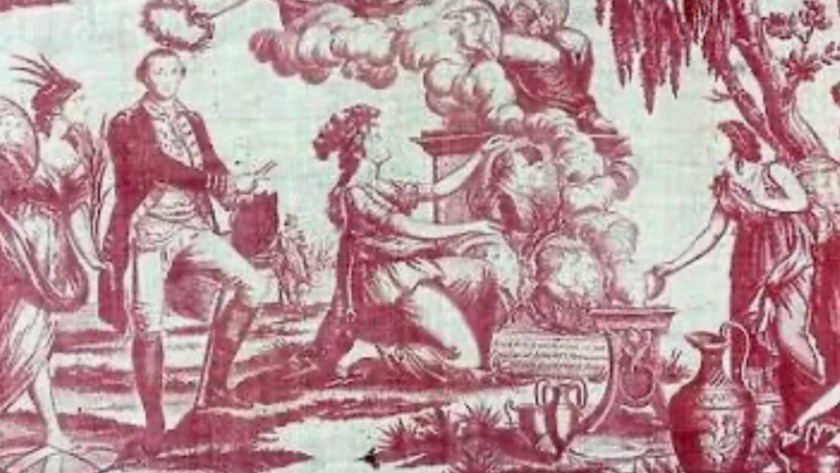
Trumbull was not only painting religious scenes with West, however. Trumbull always had an inflated sense of self-importance and during this time in England, he also completed the painting of a full-length portrait of George Washington overlooking a bluff. Then, when the painting was completed, contracted to make prints to sell to fund relief for…
After the Revolutionary War period in Col. John Trumbull’s life, another exciting chapter began. Trumbull moved to England, even as the Revolutionary War continued, and he began studying under Benjamin West. West was an American painter who had begun life as a portrait painter but had progressed in talent and respect enough to now be…
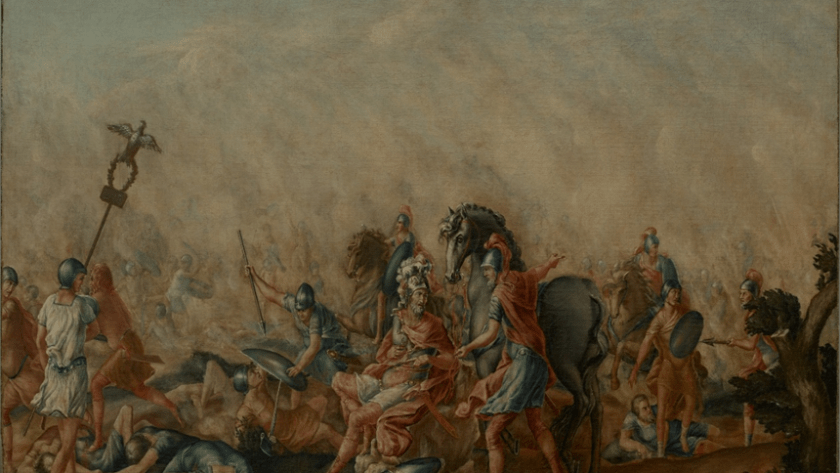
The first historical painting that Trumbull tried his hand at was “The Death of Paulus Aemilius at the Battle of Cannae.” Painted in 1773, Trumbull borrowed figures from several engravings and then pieced together this scene. This painting’s central figure is Roman Consul Paulus Aemilius, who was wounded and given the chance to escape on…
Trumbull’s father, who had used his weight to get Trumbull late admission to Harvard once again used his influence on behalf of his youngest son when the Revolutionary War began. The elder Trumbull made sure that he was given duties in the Continental Army where he would generally not be in direct combat. Trumbull was…
Trumbull, as a youth, was a good student. His father was determined that his son made a dependable living and not as an artist, as Trumbull was hoping. Trumbull, at this time, was well into his teens and was adamant that he wanted to be an artist. His father wanted no part of that. The…
Early American artists often traveled from city to city to study and to paint the portraits of notable members of society and the wealthy elite. Many times, these artists also had higher aspirations of becoming history painters, but always they had to earn a living. Portrait commissions were the most reliable way for an artist…