With no other recourse, and finally with the money saved, Trumbull readied himself and went to Harvard to study law. His father had pulled some strings and instead of entering as a Freshman, Trumbull would enter, at the age of fifteen, as a Junior. Trumbull was older than most of the boys in his class…
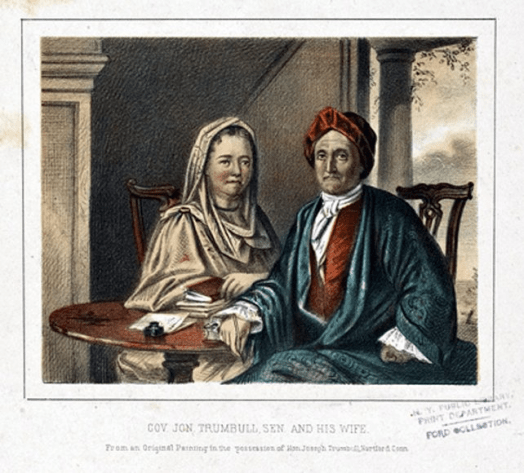
Col. John Trumbull was the fifth child of Gov. Jonathon Trumbull and his wife Faith, pictured above in a print of a painting from 1778 housed as per the Conneticut Historical Society, artist not listed. As it is often with the youngest child of a large family, he had many hours to fill on his…
Trumbull painted many miniature portraits. These were not the usual types of miniatures that were used as decoration. These types of miniatures were often painted with watercolors on ivory. Trumbull’s miniatures were different because, although small, they were done in oil on mahogany. Painted with impastos and glazing techniques, Trumbull’s miniatures show texture and depth.…
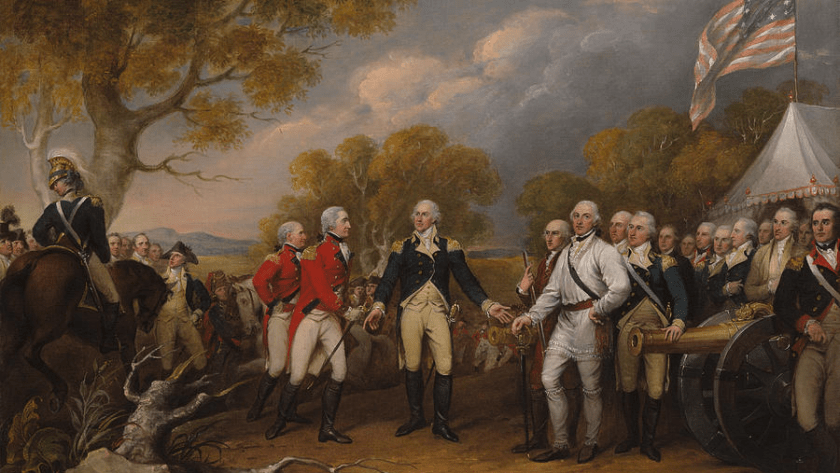
The fourth painting of Trumbull’s that is housed in the Capitol Rotunda is “The Surrender of General John Burgoyne.” General Burgoyne shares the central position with General Horatio Gates of the Continental Army. Authentic to the battlefield, this painting records well what a Revolutionary battlefield looked like, sounded like, and felt like. This is likely…
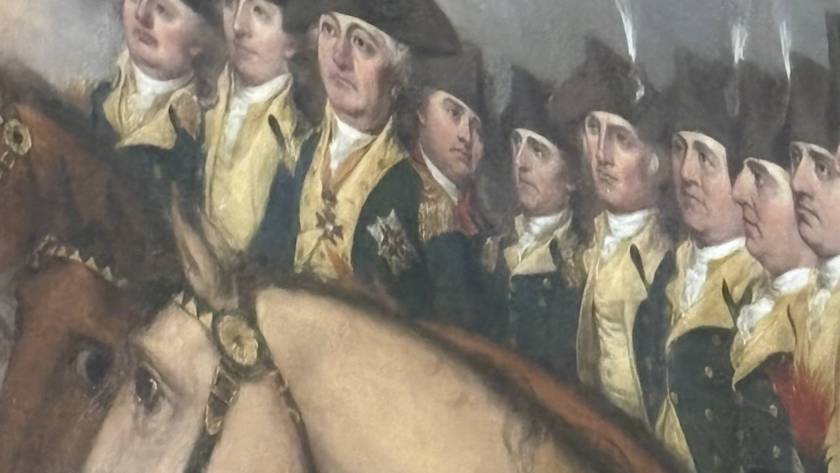
The third painting of Washington by Trumbull to hang in the Captiol Rotunda is called “The Surrender of Lord Cornwallis” and depicts a real event that happened during the Revolution in 1781. This painting confuses people. The first confusing detail is that Cornwallis is absent from the painting that bears his name. The second…
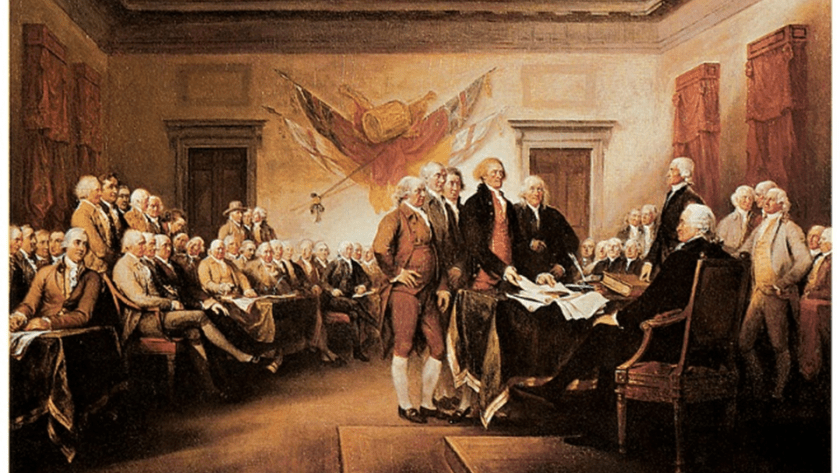
In addition to the well-known “Declaration of Independence,” Trumbull also painted two important paintings of Washington that hang in the Capitol Rotunda. The painting of Washington handing in his resignation called, “The Resignation of General Washington" is another study of the social register in Revolutionary America. This painting, besides the significance of who is represented,…
When the commission of the paintings for the Capitol Rotunda was being discussed, Trumbull was desperate to be chosen. This seemed to him to be the culmination of what he had worked for all his life. To this, he swallowed his pride and wrote to Jefferson asking for his endorsement. Jefferson, remembering their earlier days…
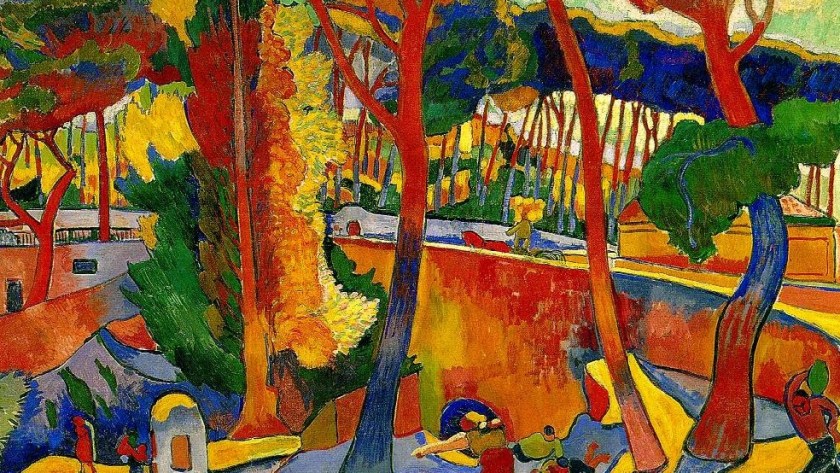
Andre Derain, a French painter and one of the founders of the short lived Fauvist movement, painted a color charged scene of the French countryside named “The Turning Road, L'Estaque” in 1906. This painting was created in what was the last few minutes of an art movement that lasted only between 1901 and 1906 and…
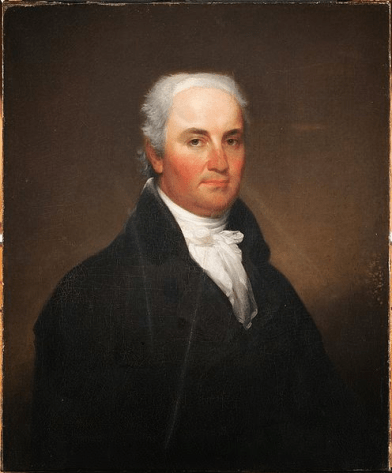
John Trumbull. Jonathan Trumbull, Sr. (1710–1785), LL.D. 1779.
Young Trumbull did have two incidents in childhood that bear mentioning. The first was that as a baby, he would suffer convulsions, often having three of four a day. By the time he was nine months old, the convulsions had been increasing in both number and severity…
. The Trumbull family had their roots in early America from the time the colonies began. There is a John Trumbull listed on documents starting in 1640 in Massachusetts who hailed from England, near the Scottish border. He was believed to be the first ancestor of Col. John Trumbull to live in America from their…
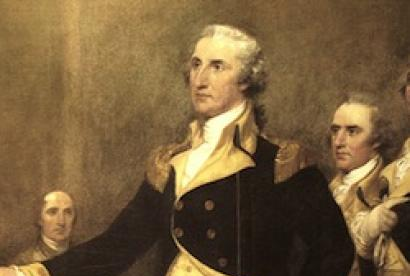
Trumbull was not only painting religious scenes with West, however. Trumbull always had an inflated sense of self-importance and during this time in England, he also completed the painting of a full-length portrait of George Washington overlooking a bluff. Then, when the painting was completed, contracted to make prints to sell to fund relief for…
After the Revolutionary War period in Col. John Trumbull’s life, another exciting chapter began. Trumbull moved to England, even as the Revolutionary War continued, and he began studying under Benjamin West. West was an American painter who had begun life as a portrait painter but had progressed in talent and respect enough to now be…